The Impact of Earth’s Rotation on Time Measurement

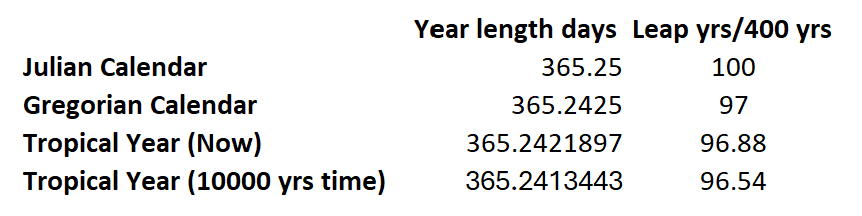
The year length and number of leap years in different calendars

The standard unit of time in the SI system is the second, historically defined as 1/86400th of a mean solar day. The modern definitions since 1967 is based upon a caesium atom transition. The Earth's rotation is gradually slowing down meaning that in thousands of years' time the second may need to be redefined to bring it back in line with the mean solar day.
The Three Types of Year: Sidereal, Tropical, Anomalistic

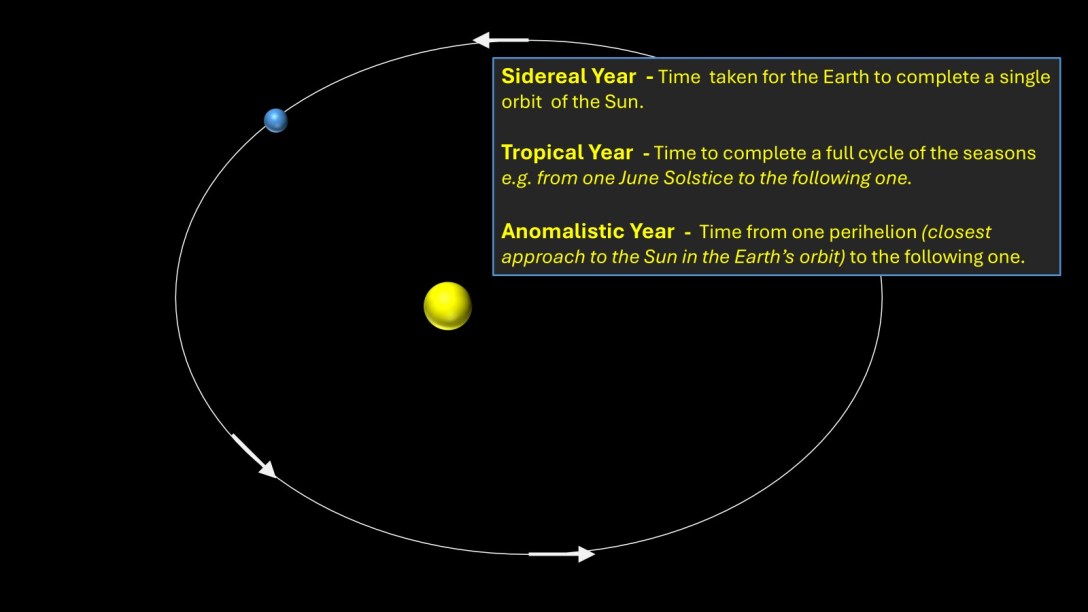
The Thre different types of year based upon the Earth's orbit

The post explains that a year is defined by Earth's orbital motion around the Sun, encompassing three types: the sidereal year (365.256 days), the tropical year (approximately 365.242 days), and the anomalistic year (365.259 days). It discusses their lengths, differences, and the implications for calendars, notably the transition from the Julian to the Gregorian calendar to align with seasonal changes.