
On May 9 Jupiter is at opposition. This event, which occurs every 399 days, happens when Jupiter is at its closest to the Earth and at its brightest. To the naked eye it is a brilliant white object, three times brighter than the brightest star. Features such as coloured bands and the famous great red… Continue reading Jupiter at opposition 9 May 2018
Author: Steve Hurley
Hi I am Steve Hurley. Although I work in the IT industry. I studied for a PhD in astronomy in the 1980s. My real passion is explaining scientific concepts to a non-scientific audience. My blog (explainingscience.org) covers various scientific topics, but primarily astronomy. It is written in a style that it is easily understandable to the non scientist.
Publications and videos
For links to my books and videos please visit www.explainingscience.org
The Rare Earth hypothesis
Updated 15 December 2025 Ever since the pioneering work of Frank Drake (1930-2022) way back in 1960, astronomers have been looking for radio signals from extraterrestrial civilisations but all SETI searches have failed to find anything. This could be because Earth-like planets containing complex life forms (such as ourselves) are rare in the Universe and only… Continue reading The Rare Earth hypothesis
Galileo and the telescope
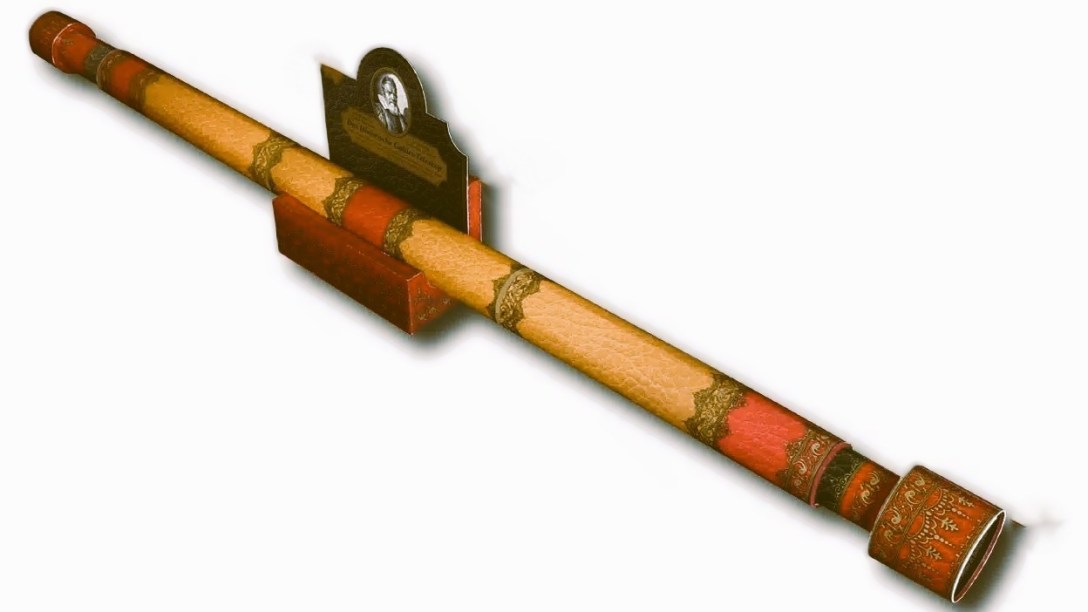
Updated March 2026 Telescopes are instruments which use multiple lenses to produce magnified images of distant objects. It is unclear who invented the first telescope: lenses had been widely used in Europe to correct poor eyesight since the fourteenth century and I expect that, over time, the telescope was actually invented many times by different… Continue reading Galileo and the telescope
20 March 2018 – the equinox
Now that we are in the month of March, it is only a short time until 21 March, the first day of spring (or first day of autumn if you're one of my readers in the southern hemisphere). There is a commonly held view that 21 March is an equinox and that the equinoxes are the two… Continue reading 20 March 2018 – the equinox
American manned spaceflight in 2018?
This post has been superseded by the later post American spaceflight in 2019 As readers of a previous post will know, since the retirement of the Space Shuttle in July 2011, America has been unable to put any astronauts into orbit around the Earth. Instead, it has been reliant on the Russian Soyuz spacecraft to… Continue reading American manned spaceflight in 2018?
 Explaining Science