Welcome Welcome to the latest post from the Science Geek. The topic of this post, which is part of a series about the Moon, is the Chinese manned space programme. As I said in my last post, sadly it is now nearly 42 years since the last Apollo astronauts lifted off from the Moon's surface… Continue reading Chinese Manned spaceflight
Author: Steve Hurley
Hi I am Steve Hurley. Although I work in the IT industry. I studied for a PhD in astronomy in the 1980s. My real passion is explaining scientific concepts to a non-scientific audience. My blog (explainingscience.org) covers various scientific topics, but primarily astronomy. It is written in a style that it is easily understandable to the non scientist.
Publications and videos
For links to my books and videos please visit www.explainingscience.org
Manned Missions to the Moon
Welcome Welcome to the latest post from the Science Geek. This post, which is part of a series on the Moon, discusses manned exploration of the Moon. I hope you enjoy reading it and, as always, please let me know if you have any comments. I would also like, once again, to thank Mrs Geek… Continue reading Manned Missions to the Moon
The Days are Getting Longer
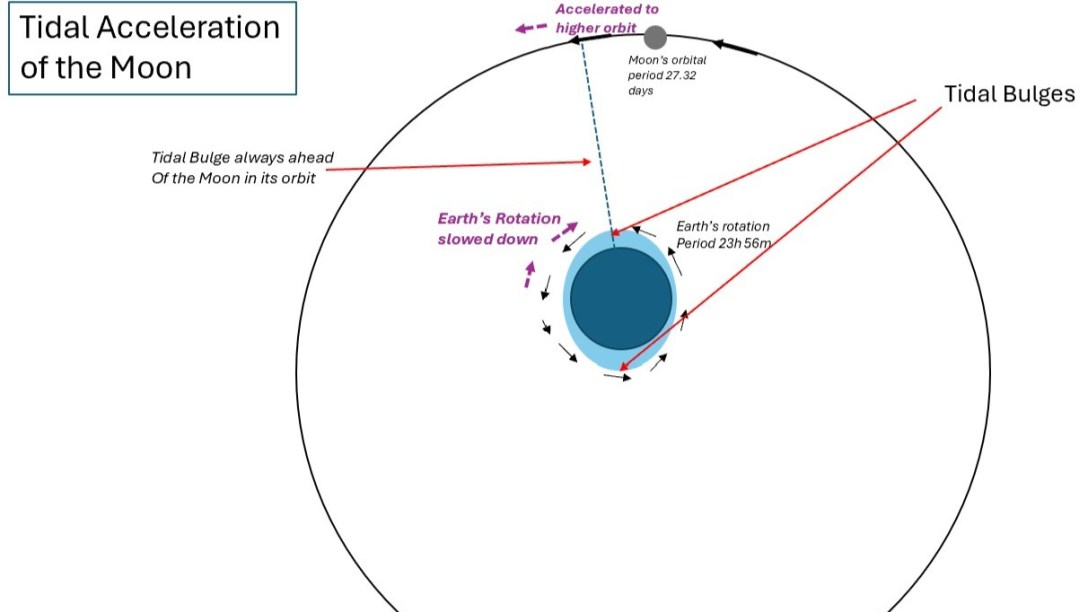
The Moon's gravitational influence creates tides on Earth, with tidal bulges occurring on both sides of the planet. This interaction gradually slows Earth's rotation, lengthening days and causing the Moon to drift away at about 3.8 cm per year. Past proximity may have facilitated the emergence of early life due to stronger tidal forces.
The Moon – Our Nearest Neighbour
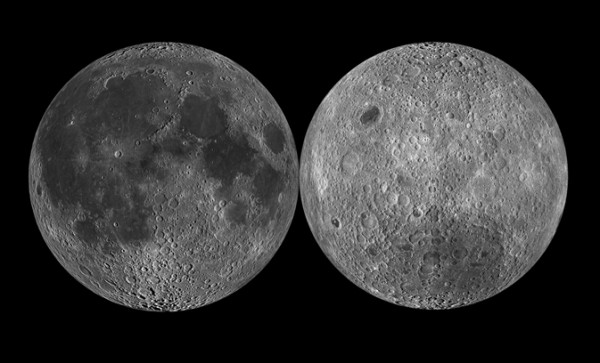
The Moon, Earth's closest neighbor, has captivated humanity for centuries, with its distinct phases observable over a 29.5-day cycle. While it appears similar in size to the Sun, its distance affects visibility during eclipses. The enigmatic far side remains a source of mystery and conspiracy theories, revealed only through space exploration.
Pluto may be wearing a dark belt of moon dust
An interesting blog post I found today. Did you know that Pluto, which is only one sixth the mass of the moon, used to be classified as a planet? However, in 2006 it was re-classified as a dwarf planet by the International Astronomical Union.

