The standard unit of time in the SI system is the second, historically defined as 1/86400th of a mean solar day. The modern definitions since 1967 is based upon a caesium atom transition. The Earth's rotation is gradually slowing down meaning that in thousands of years' time the second may need to be redefined to bring it back in line with the mean solar day.
Tag: Time
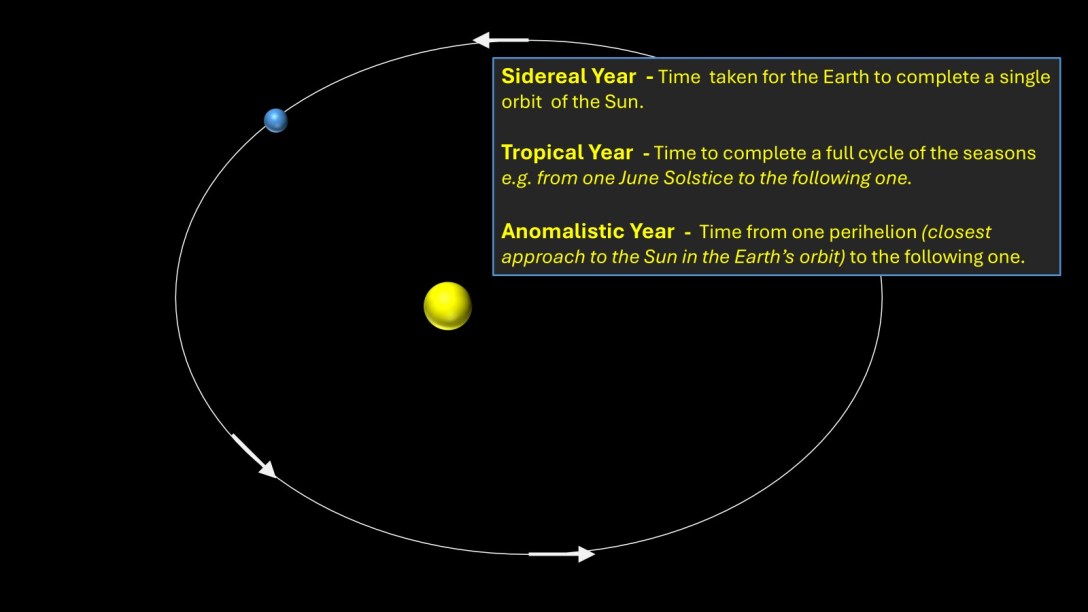
The Three Types of Year: Sidereal, Tropical, Anomalistic
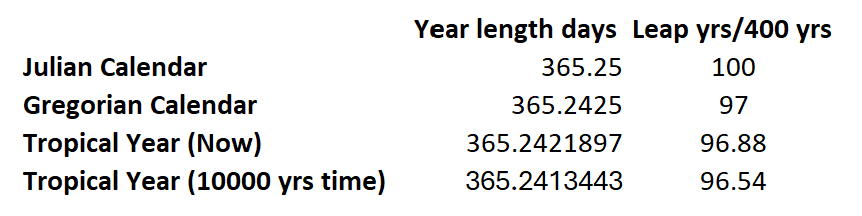
The post explains that a year is defined by Earth's orbital motion around the Sun, encompassing three types: the sidereal year (365.256 days), the tropical year (approximately 365.242 days), and the anomalistic year (365.259 days). It discusses their lengths, differences, and the implications for calendars, notably the transition from the Julian to the Gregorian calendar to align with seasonal changes.
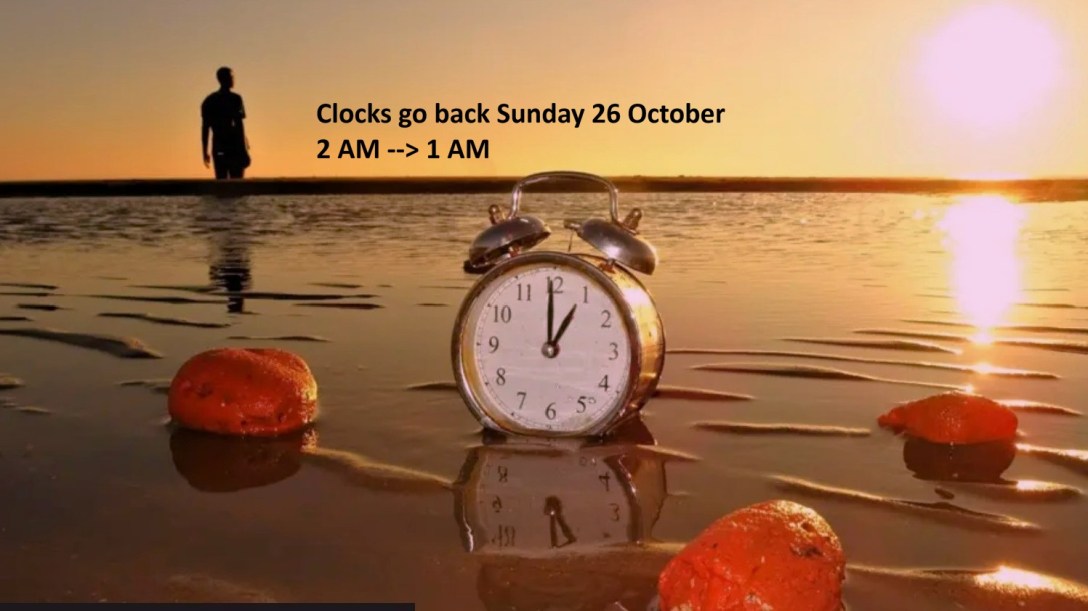
The Clocks go Back 26 October 2025
At 0100 UTC (2 AM local time) on Sunday 26 October, the UK like most of Europe will put it clocks back by one hour at is comes to an end of Daylight Saving Time. Most of the USA will follow a week later. In this post I'll give an overview of DST and why… Continue reading The Clocks go Back 26 October 2025
Twilight and the Long Summer Evenings
There are extended daylight hours and twilight periods during summer at northern latitudes The article focusses on Manchester and Shetland. It defines twilight and its three stages, highlights the Sun's path at various times of the year, and explains the phenomenon of "Simmer Dim" in Shetland and the celebrations associated with these light nights.
June 21 2025 – the solstice
In 2025, for most people in the world the June solstice will fall on 21 June. For those of us living in the the Northern Hemisphere, it is the day of the year when there is the most daylight. The origin of the word solstice is from two Latin words: sol, which means Sun, and sistere, to… Continue reading June 21 2025 – the solstice