Merry Christmas to all my readers and followers and I wish you all a happy New Year. The majority of people who celebrate Christmas Day, whether for religious or cultural reasons or both, do so on 25 December. However, followers of the Orthodox churches generally celebrate Christmas Day thirteen days later, on January 7. The reasons… Continue reading Christmas Day – December 25th or January 7th?
Author: Steve Hurley
December 31 2016 Leap Second
On New Year's Eve an extra second will be added to the end of the day. This extra second is called a leap second. As I'll explain later, leap seconds need to be added periodically to bring the time we measure with accurate atomic clocks in line with the natural time which results from the rotation of the… Continue reading December 31 2016 Leap Second
An idea for Christmas from Explaining Science
Revised 12 December 2025 Now that Christmas is nearly upon us, if you've not done so already why not treat yourself to an e-book from Explaining Science. If you'd like to know more about popular astronomy , I've written three e-books which are available in the Amazon Kindle store at a nominal cost. By… Continue reading An idea for Christmas from Explaining Science
Chinese manned space programme
On 18 November two Chinese astronauts, Jing Haipeng and Chen Dong, landed back on Earth after spending 33 days in space, an event which was hardly reported in the western media. During their mission they spent 30 days aboard the Tiangong-2 space station. Image from the Chinese National Space Administration Tiangong-2, shown in the mission patch above, is the second… Continue reading Chinese manned space programme
The long summer evenings
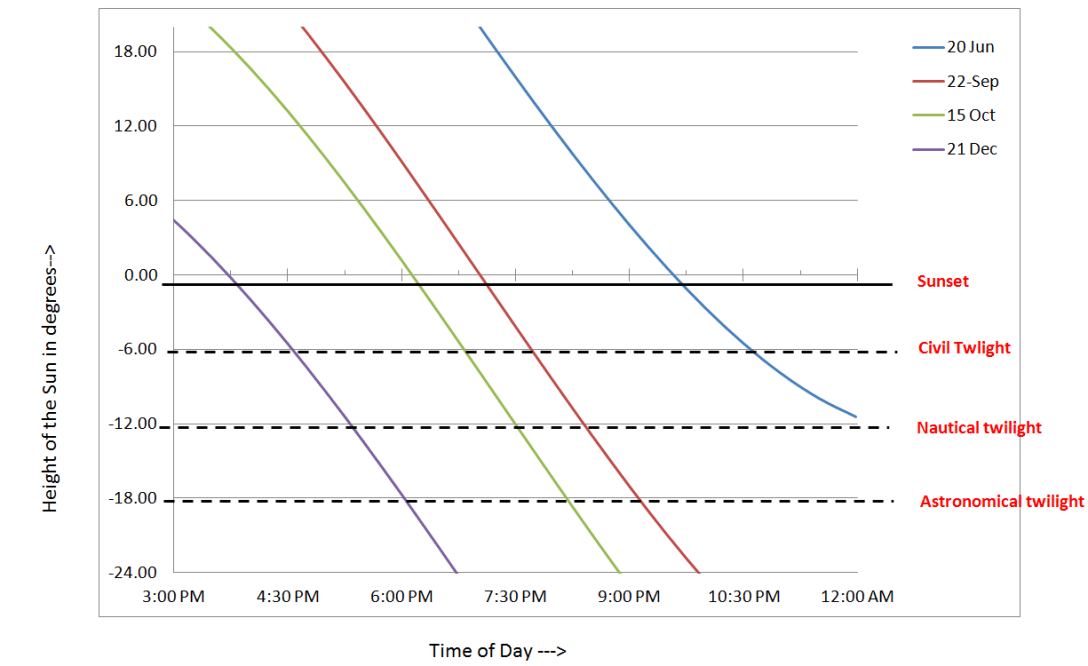
This post talks about two interesting effects to do with the way it get dark after the Sun has set. The first one, which anyone who has travelled to places lying at different latitudes will have seen, is that the closer you are to the equator the quicker it gets dark after the Sun has… Continue reading The long summer evenings