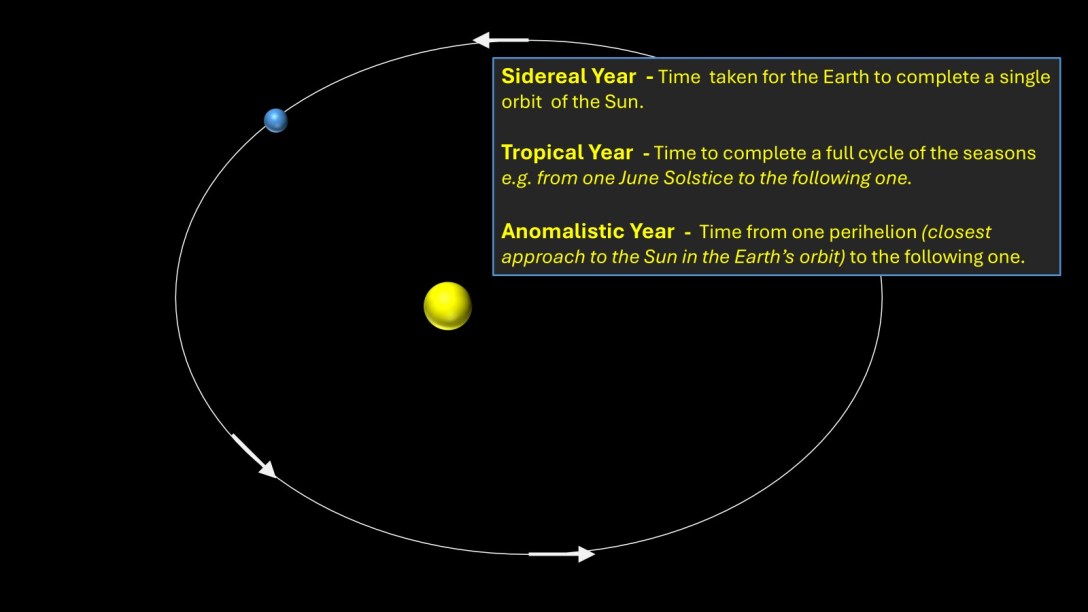
The post explains that a year is defined by Earth's orbital motion around the Sun, encompassing three types: the sidereal year (365.256 days), the tropical year (approximately 365.242 days), and the anomalistic year (365.259 days). It discusses their lengths, differences, and the implications for calendars, notably the transition from the Julian to the Gregorian calendar to align with seasonal changes.
Tag: Science
Perfect Numbers
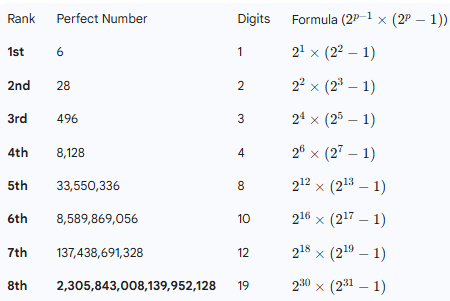
Explores perfect numbers, defined as positive integers equal to the sum of their proper divisors. Examples include 6, 28, and 496, with only 52 known today. It discusses mathematical properties, unsolved questions about odd perfect numbers, historical significance, and the connection to Mersenne primes, highlighting their allure across centuries.
Five Popular Science Books by Real Scientists
The author shares a curated list of five recommended science books, emphasizing that they are well-reviewed and written by experts in their fields. The selection includes titles from prominent scientists including Neil Degrasse Tyson and David Deutsch, targeting a general audience interested in science.
NASA’s Artemis Moon Missions Update
Updated 30 November 2025 A lot has happened since I wrote a  post back in June 2025 about the Artemis programme. At the time it looked like America would be landing astronauts on the Moon in mid-2027. However in October, concerned by delays in SpaceX’s Starship HLS, the NASA Acting Administrator Sean Duffy revealed that… Continue reading NASA’s Artemis Moon Missions Update
Solar Sails: Fuel-Free Space Travel
Solar sails are the only method of spacecraft propulsion in which no fuel is needed. Until recently spacecraft powered by solar sails were the stuff of science fiction. However, Â following the success of the Japanese spacecraft IKAROS in 2010 the crowd-funded Light Sail 2 spacecraft in 2019 and NASA's ACS3 in 2024, spacecraft powered by… Continue reading Solar Sails: Fuel-Free Space Travel