Reducing global carbon dioxide emissions

In early November 2021 much of the world’s media was focussed on the Glasgow Climate Change Conference (also known as COP26). As most of you will know, its key objectives were to get individual states to commit to reduce their greenhouse gas emissions, to end deforestation and to plan to move away from fossil fuel… Continue reading Reducing global carbon dioxide emissions

Opportunities for solar energy

In 2019, the year before the restrictions of the covid-19 pandemic, the world energy consumption was slightly higher at around 170 000 TWh. In this post I will talk about some of the science behind this amazing fact and discuss the  challenge of getting solar energy from where it is plentiful to where it is… Continue reading Opportunities for solar energy

The Perseids 2021

The night of  12/13  August will be the peak of the Perseids, one of the most famous prolific meteor showers. Meteors (also known as shooting stars) are bright streaks of light caused by small lumps of rock or metal called meteoroids hitting the Earth’s atmosphere at very high speed (in the case of the Perseids around 200,000 km/h).… Continue reading The Perseids 2021

Satellite Navigation

Satellite navigation systems have come to affect countless aspects of our daily lives, from directing our holiday aeroplanes to enabling us to drive round an unfamiliar city without any map other than the one on our mobile phone. Most new cars sold today have an inbuilt Sat Nav and you can buy trackers relatively cheaply… Continue reading Satellite Navigation

The changing pole star

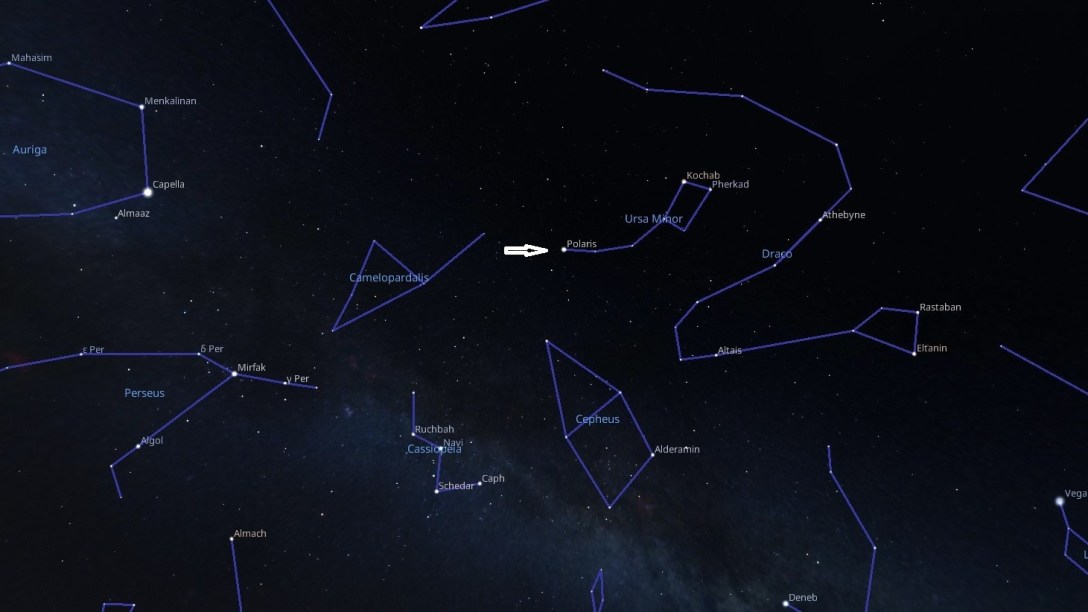
Updated 21 November 2025 Many people know that Polaris, the brightest star in the constellation Ursa Minor (The Little Bear), is also known as the pole star. Indeed, the name Polaris itself was invented in the sixteenth century and is derived from the Latin stella polaris -pole star. The location of Polaris - Image credit… Continue reading The changing pole star