
The Oort Cloud, theorized by Jan Oort in 1950, is a vast, icy structure beyond the Solar System, containing trillions of objects. It is divided into the sparse outer cloud and the denser, doughnut-shaped inner cloud. Evidence for its existence includes the orbits of long-period comets. Galactic tides and interactions with giant planets likely contributed to its formation and distribution of icy bodies.
Tag: Astronomy
Astronomy Items
Venus the Morning Star
Anybody who has observed the eastern sky just before sunrise in the last few weeks will have noticed a brilliant white object - the planet Venus, also known as the morning star. It is brighter than any other planet and at its brightest ten times brighter than Sirius the brightest star. Its brightness has often… Continue reading Venus the Morning Star
The Lyrids 2025

The night of 22/23 April 2025 will be the peak of the Lyrids, one of the most famous prolific meteor showers. Meteors (also known as shooting stars) are bright streaks of light caused by small lumps of rock or metal called meteoroids hitting the Earth’s atmosphere at very high speed. As they pass through the atmosphere they get… Continue reading The Lyrids 2025
eBooks from Explaining Science 2024
Update 30 August 2025 I have extensively expanded and rewritten all three “A Short Guide to…” e-books. I will make these books available on Kindle for a competitive price. However, in future I won’t do any deals where I offer free or discounted prices on these books for a limited time period. I believe the… Continue reading eBooks from Explaining Science 2024
Understanding the Magnitude Scale in Astronomy
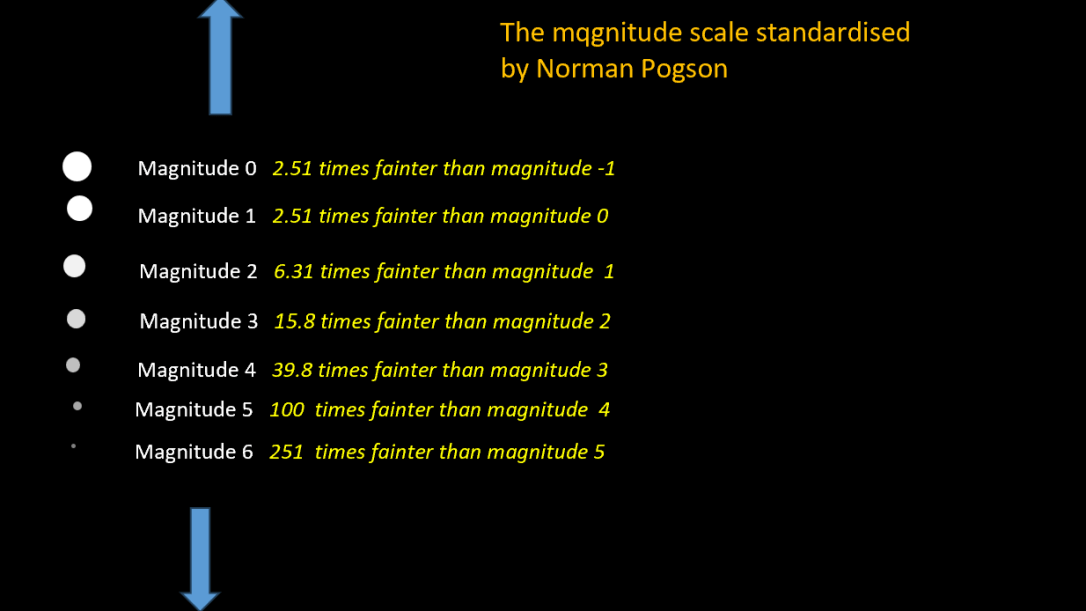
Astronomers use the magnitude scale to measure the brightness of celestial objects, originally developed by Greek astronomers. Standardized by Norman Pogson in 1856, the scale uses whole and fractional values. Today, it encompasses all luminous objects, with both apparent and absolute magnitudes.

