For revised post containing more tips on how to view the Perseids see The Perseids 2021. Meteors (also known as shooting stars) are bright streaks of light caused by small lumps of rock or metal called meteoroids hitting the Earth's atmosphere at a very high speed (in the case of the Perseids around 200,000 km/h). As… Continue reading 11-12 August 2020 – the Perseids
Tag: Dark sky
Dark Sky Places
In this post I will talk about the work of the International Dark-Sky Association (https://www.darksky.org/)and the visit I made a few years ago to the Kielder Observatory, which is in the Northumberland Dark Sky park in northern England. The International Dark-Sky Association (IDA) was founded in 1988 by David Crawford a professional astronomer, who spent… Continue reading Dark Sky Places
12-13 August 2019 – the Perseids
For revised post containing more tips on how to view the Perseids see The Perseids 2021. Meteors (also known as shooting stars) are bright streaks of light caused by small lumps of rock or metal called meteoroids hitting the Earth's atmosphere at a very high speed (in the case of the Perseids around 200,000 km/h). As… Continue reading 12-13 August 2019 – the Perseids
12-13 August 2017 – the Perseids
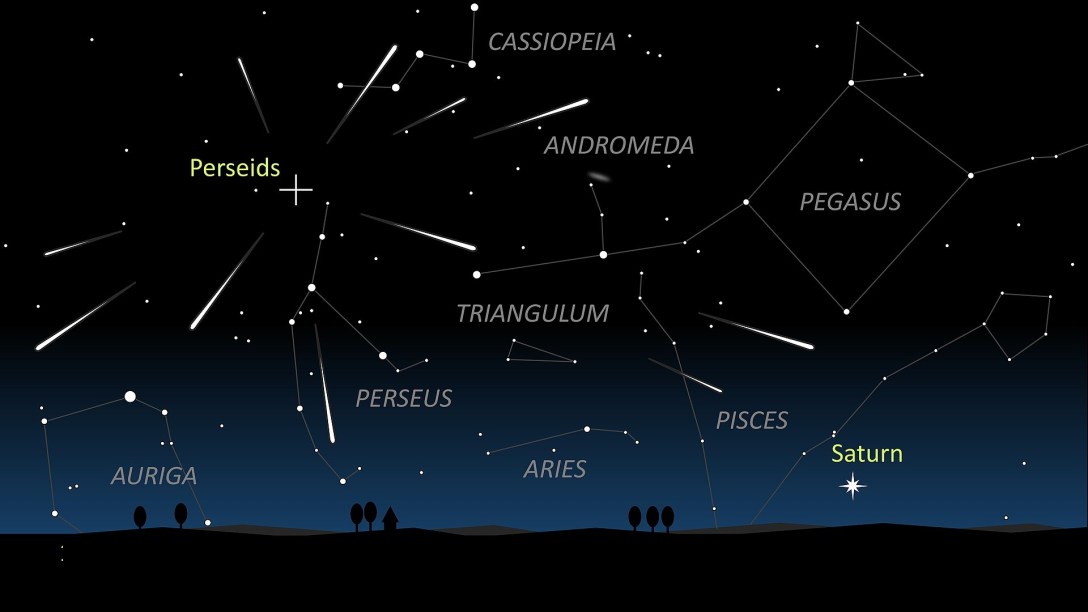
In this post originally published in 2017 I talk about the Perseids meteor shower. Occurring annually from late July to mid-August, it offers an alternative for those who were unable to see the August 2017 eclipse. Best observed just before dawn in dark areas, the meteor shower is caused by the Earth passing through debris from the comet Swift-Tuttle. Clear skies enhance the viewing experiences!
The Three Phases of Twilight Explained
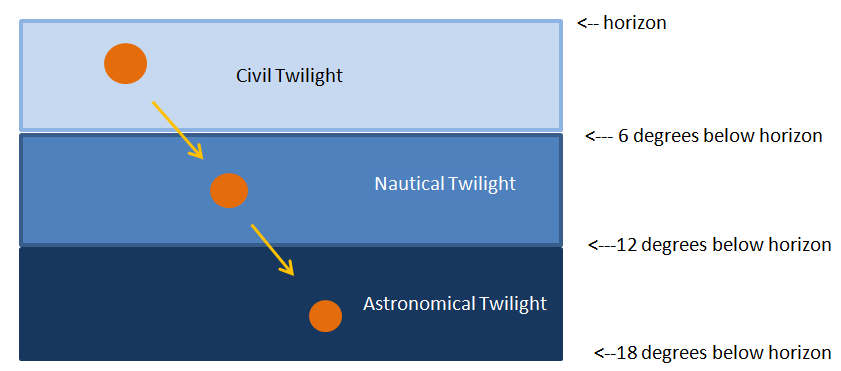
Updated August 2026 Watching the Sun set below the horizon and the sky gradually get darker and darker is an almost magical experience. Twilight is that time of the day, just after sunset, or just before sunrise when the Sun is below the horizon but the sky is not completely dark. It is valued by photographers… Continue reading The Three Phases of Twilight Explained

