
Revised and updated 12 February 2026 July 25, is one of the four days a year in which the length of the apparent solar day, the natural day measured by the rising and setting of the Sun, is 24 hours. I have written about this in previous posts but I thought it be worth mentioning… Continue reading Understanding Solar Day Length Variation
Tag: Equation of Time
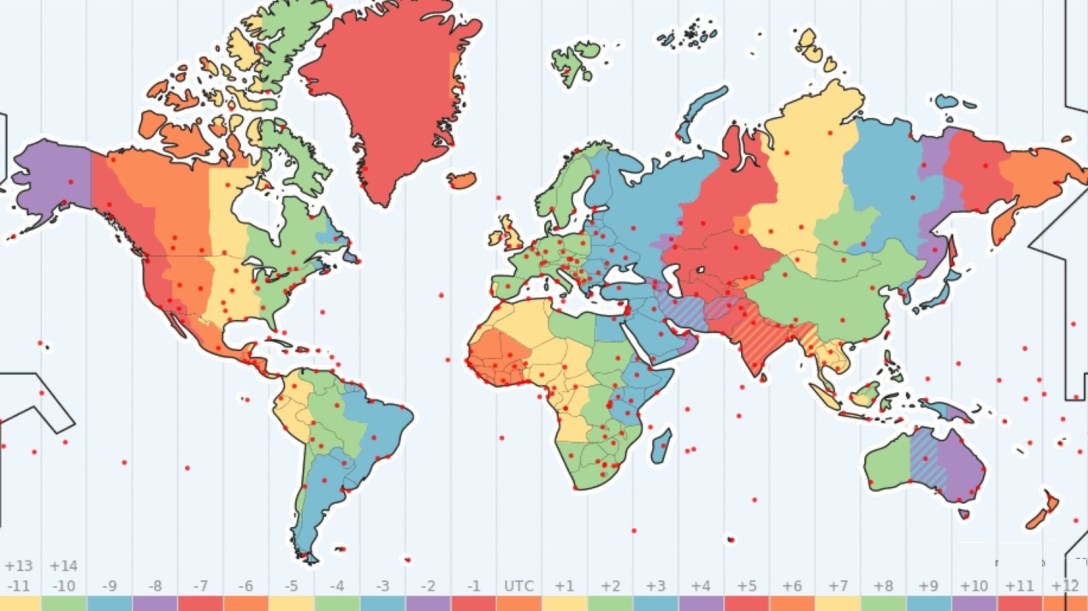
The Science Behind Time Zones Explained
Discusses the measurement of time and the use of time zones globally. It explains solar time, apparent solar time, and mean solar time, highlighting how time varies due to Earth's orbit and tilt. The establishment of standard time zones, particularly through GMT, addresses coordination for transportation and communication..
How the length of a day changes over the year
The length of a solar day varies throughout the year, ranging from about 23 hours 59 minutes 38 seconds in mid-September to 24 hours 30 seconds around Christmas. This variation is caused by the Earth's elliptical orbit and axial tilt, affecting the Sun's apparent motion and leading to differences in natural time measured by sundials versus clock time.
12 Feb a special day
February 12, known as Darwin Day, is significant for both Charles Darwin's and Abraham Lincoln's birthdays, but it also marks an important astronomical event. On this day in 2026, the solar time is 14 minutes behind clock time, the greatest value of the year, with solar noon occurring shortly after 12:14 PM in London.


