
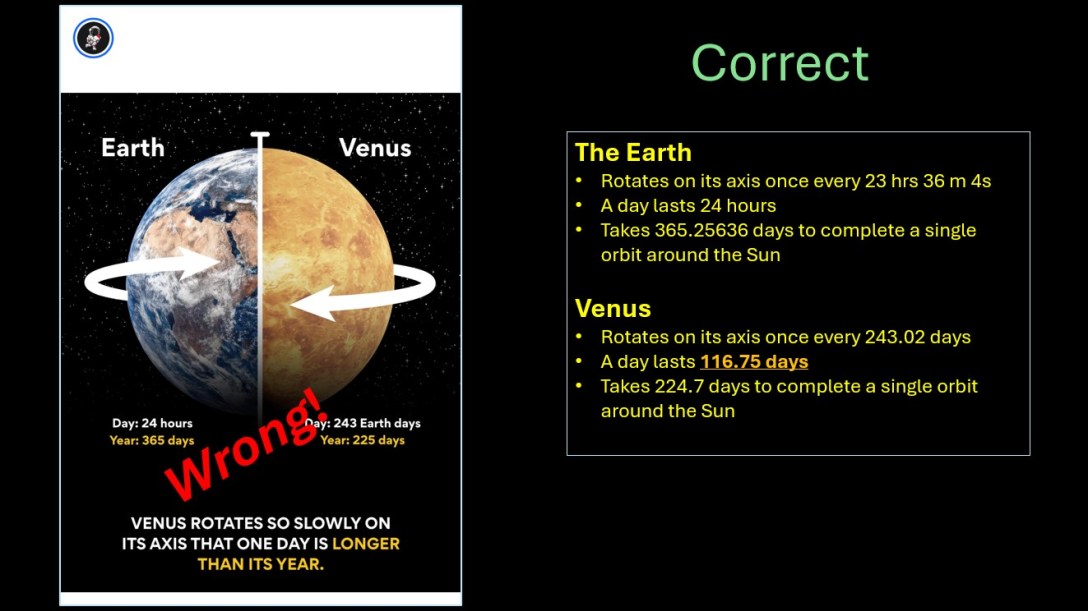
The post clarifies the distinction between a planet's rotation period and its day length, emphasizing that for planets like Venus and Mercury, these can differ significantly. It explains the calculation of a day length and examines prograde and retrograde rotation, revealing misconceptions found in popular science.
Tag: Venus
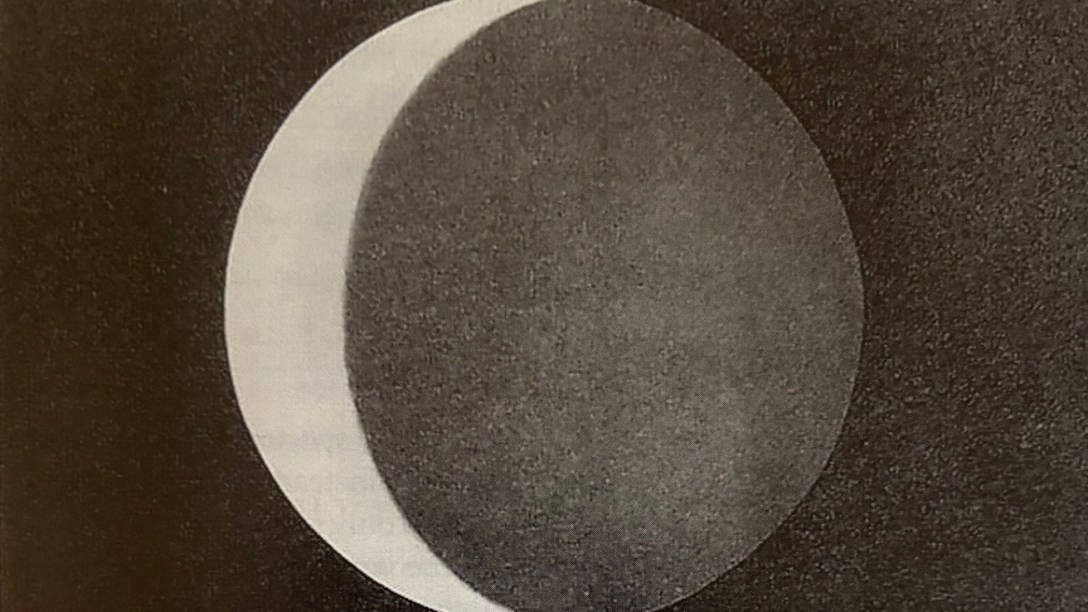
The Mystery of the Ashen Light of Venus
Updated March 2026 The ashen light is a faint glow, which many people claim to have seen on the night side of Venus. The Italian astronomer Giovanni Riccioli (1598 -1671) first reported it back in 1643, 33 years after Galileo had made the first observations of Venus with a telescope and discovered the planet had… Continue reading The Mystery of the Ashen Light of Venus
Venus the Morning Star
Anybody who has observed the eastern sky just before sunrise in the last few weeks will have noticed a brilliant white object - the planet Venus, also known as the morning star. It is brighter than any other planet and at its brightest ten times brighter than Sirius the brightest star. Its brightness has often… Continue reading Venus the Morning Star
Life on Venus?
Many of you will have seen the story widely reported in the media of the discovery of the gas phosphine in the clouds of Venus - if not, you can find the story here:ย https://www.bbc.co.uk/news/science-environment-54133538. On Earth phosphine is produced by bacteria and it has led to the interesting speculation as to whether there could be… Continue reading Life on Venus?
Why Venus Shines Brightly
Updated 22 November 2025 Anyone, even the most casual observer, ย looking atย the evening sky in the last month will have noticed the brilliant white planet Venus shining in the west. Often known as the Evening Star, Venus is the third brightest natural object in the sky after the Sun and the Moon. In this… Continue reading Why Venus Shines Brightly


