Revised and updated 12 February 2026 July 25, is one of the four days a year in which the length of the apparent solar day, the natural day measured by the rising and setting of the Sun, is 24 hours. I have written about this in previous posts but I thought it be worth mentioning… Continue reading Understanding Solar Day Length Variation
Author: Steve Hurley
Starlink and other Large Satellite Constellations
Back in 2019, the year before the pandemic, many of you will have seen images of long ‘trains’ composed of up to sixty SpaceX Starlink satellites crossing the sky in a straight line. These pictures hit the headlines not only because of the number of satellites, but because of their brightness. A 'train' of… Continue reading Starlink and other Large Satellite Constellations
Understanding Sirius: The Dog Star and Its History
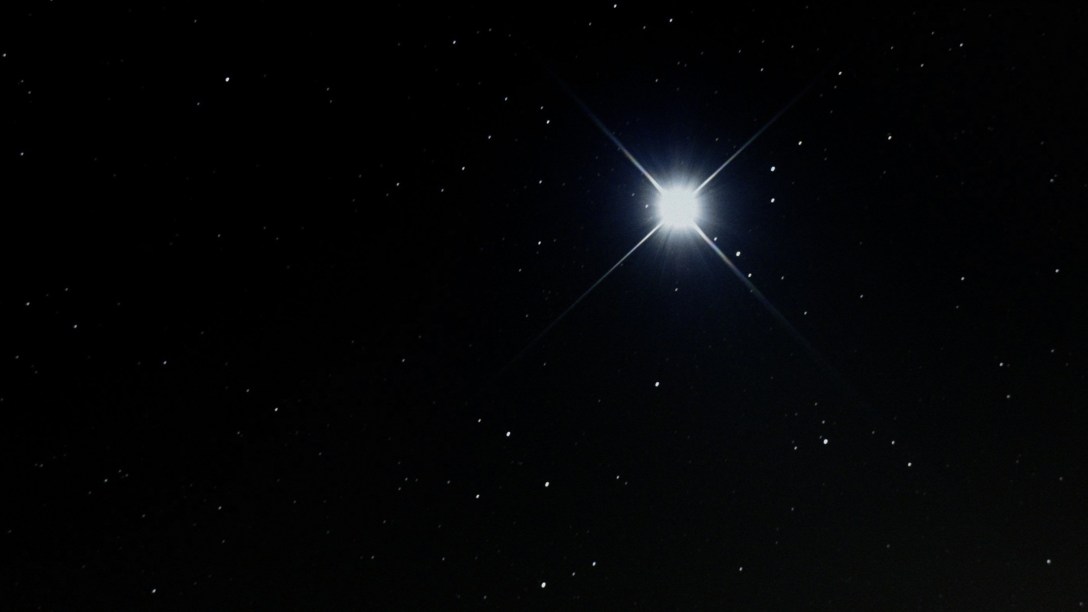
Updated 21 November 2025 As most people with an interest in astronomy know, Sirius is the brightest star in the night sky. On the magnitude scale used by astronomers it has a magnitude of -1.46, easily outshining all other stars. The apparent brightness of a star depends on two factors: how luminous it is (its… Continue reading Understanding Sirius: The Dog Star and Its History
Enceladus Could there be life 10 years on
Doesn't time fly ! 🙂 Ten years have passed since I wrote my first post on my Explaining Science blog (originally called The Science Geek). I have decided to mark the occasion by reblogging my first ever post. Over the last ten years the question whether there are primitive life forms on Saturn’s icy moon… Continue reading Enceladus Could there be life 10 years on
Fact-Checking a December Solstice Article
Sometimes a video can convey a message better than a simple blog post and videos tend to reach a slightly different audience. I do get irritated by poor reporting of science topics in the mainstream media (maybe I am getting grumpy? 😊 ). So here’s a video about the errors in the article about the… Continue reading Fact-Checking a December Solstice Article