These are some of my cosmology posts
-
The Impact of Earth’s Rotation on Time Measurement
The standard unit of time in the SI system is the second, historically defined as 1/86400th of a mean solar day. The modern definitions since 1967 is based upon a caesium atom transition. The Earth’s rotation is gradually slowing down meaning that in thousands of years’ time the second may need to be redefined to…
-
The Three Types of Year: Sidereal, Tropical, Anomalistic

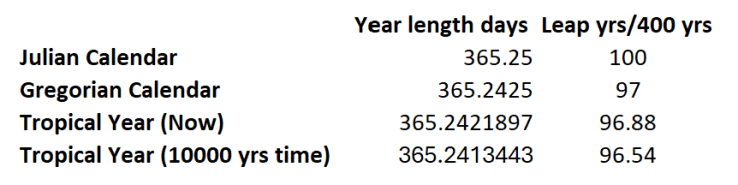
The post explains that a year is defined by Earth’s orbital motion around the Sun, encompassing three types: the sidereal year (365.256 days), the tropical year (approximately 365.242 days), and the anomalistic year (365.259 days). It discusses their lengths, differences, and the implications for calendars, notably the transition from the Julian to the Gregorian calendar…
-
Perfect Numbers
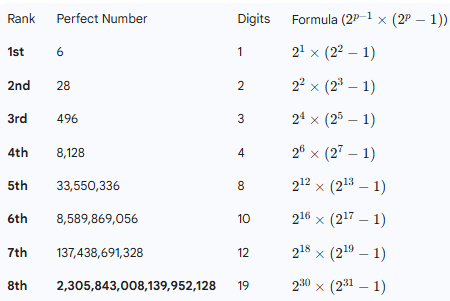
Explores perfect numbers, defined as positive integers equal to the sum of their proper divisors. Examples include 6, 28, and 496, with only 52 known today. It discusses mathematical properties, unsolved questions about odd perfect numbers, historical significance, and the connection to Mersenne primes, highlighting their allure across centuries.… Continue reading Perfect Numbers →
-
Five Popular Science Books by Real Scientists

The author shares a curated list of five recommended science books, emphasizing that they are well-reviewed and written by experts in their fields. The selection includes titles from prominent scientists including Neil Degrasse Tyson and David Deutsch, targeting a general audience interested in science. … Continue reading Five Popular Science Books by Real Scientists →
-
The Mystery of the Ashen Light of Venus
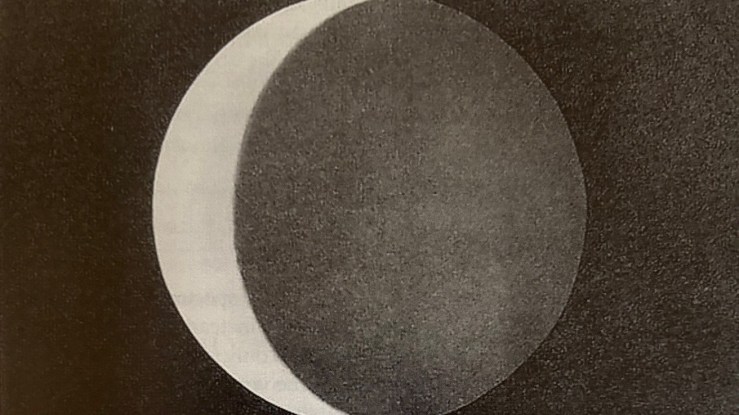
Updated March 2026 The ashen light is a faint glow, which many people claim to have seen on the night side of Venus. The Italian astronomer Giovanni Riccioli (1598 -1671) first reported it back in 1643, 33 years after Galileo had made the first observations of Venus with a telescope and discovered the planet had…
-
NASA’s Artemis Moon Missions Update
Updated 30 November 2025 A lot has happened since I wrote a post back in June 2025 about the Artemis programme. At the time it looked like America would be landing astronauts on the Moon in mid-2027. However in October, concerned by delays in SpaceX’s Starship HLS, the NASA Acting Administrator Sean Duffy revealed that…
-
The Clocks go Back 26 October 2025
Updated March 2026 At 0100 UTC (2 AM local time) on Sunday 26 October, the UK like most of Europe will put it clocks back by one hour as is comes to an end of Daylight Saving Time. Most of the USA will follow a week later. In this post I’ll give an overview of…
-
Solar Sails: Fuel-Free Space Travel
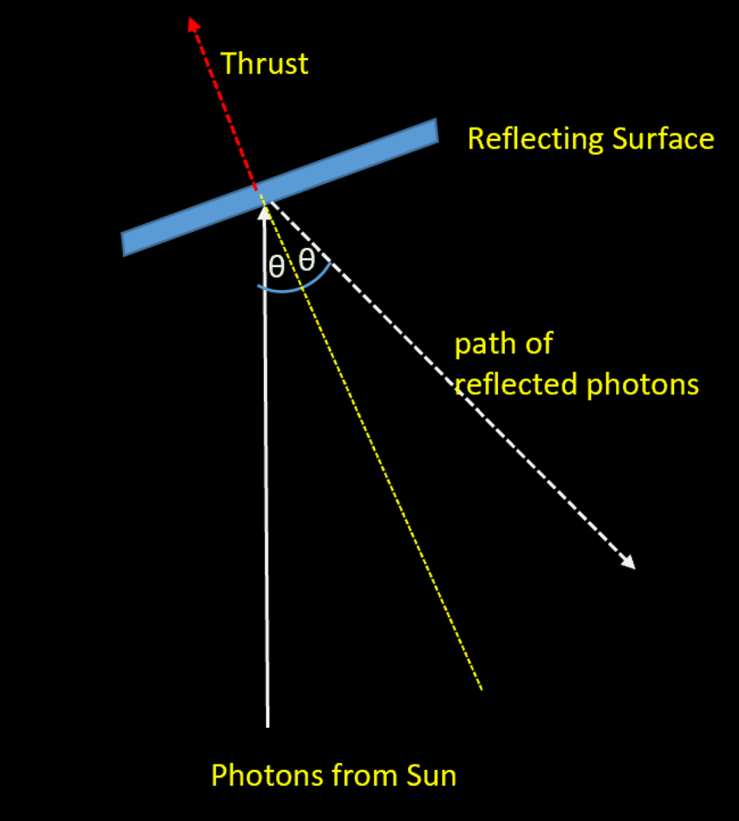
Solar sails are the only method of spacecraft propulsion in which no fuel is needed. Until recently spacecraft powered by solar sails were the stuff of science fiction. However, following the success of the Japanese spacecraft IKAROS in 2010 the crowd-funded Light Sail 2 spacecraft in 2019 and NASA’s ACS3 in 2024, spacecraft powered by…
-
How we can see some of the Moon’s far side
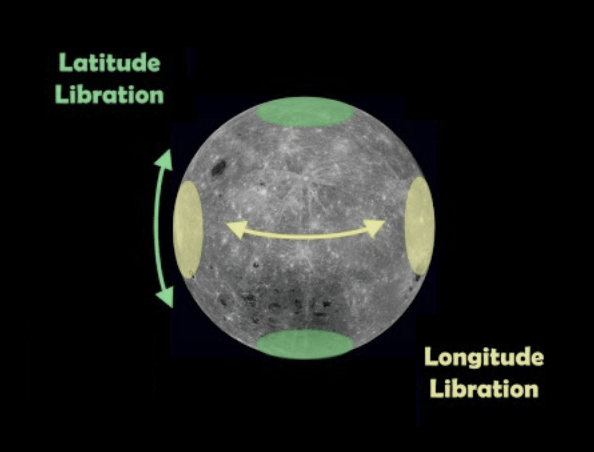
Lunar libration is a ‘wobble’ caused mainly by the Moon’s elliptical orbit and axial tilt. It allows us to see about 59% of the Moon’s surface over time, effectively revealing 18% of the ‘far side’ that would otherwise be hidden. This post discusses this interesting phenomenon. Updated 7 January 2026 Many people think that the…
-
Lunar Stationary Orbits: Why They are Impossible
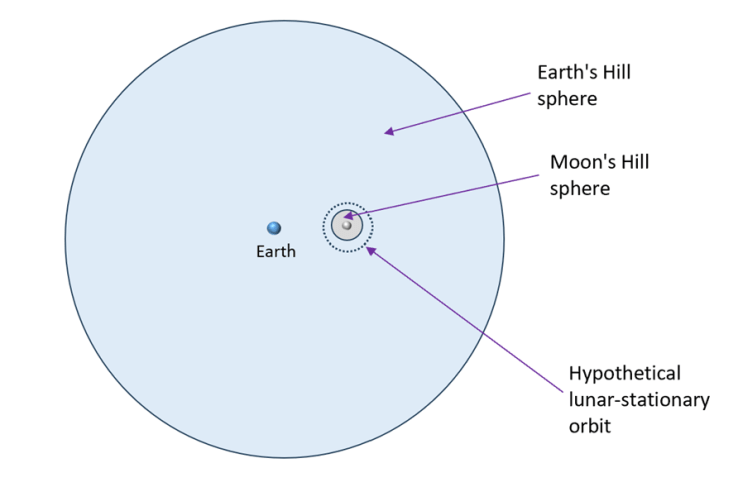
A friend of mine recently asked me whether it was possible to have a lunar-stationary orbit. This would be the equivalent of a geostationary orbit, but around the Moon rather than the Earth. To an observer on the Moon, a lunar-stationary satellite would appear fixed in the sky and if a dish were pointed…
 Explaining Science