These are some of my latest posts
-
Understanding Solar Day Length Variation

Revised and updated 12 February 2026 July 25, is one of the four days a year in which the length of the apparent solar day, the natural day measured by the rising and setting of the Sun, is 24 hours. I have written about this in previous posts but I thought it be worth mentioning…
-
Starlink and other Large Satellite Constellations

Back in 2019, the year before the pandemic, many of you will have seen images of long ‘trains’ composed of up to sixty SpaceX Starlink satellites crossing the sky in a straight line. These pictures hit the headlines not only because of the number of satellites, but because of their brightness. A ‘train’ of…
-
Sirius: The Dog Star and Its History
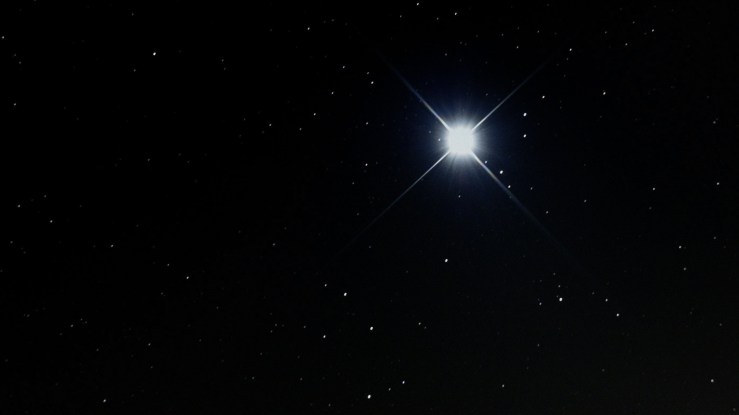
Updated Marck 2026 As most people with an interest in astronomy know, Sirius is the brightest star in the night sky. On the magnitude scale used by astronomers it has a magnitude of -1.46, easily outshining all other stars. The apparent brightness of a star depends on two factors: how luminous it is (its intrinsic…
-
Enceladus Could there be life 10 years on
Doesn’t time fly ! 🙂 Ten years have passed since I wrote my first post on my Explaining Science blog (originally called The Science Geek). I have decided to mark the occasion by reblogging my first ever post. Over the last ten years the question whether there are primitive life forms on Saturn’s icy moon…
-
Fact-Checking a December Solstice Article
Sometimes a video can convey a message better than a simple blog post and videos tend to reach a slightly different audience. I do get irritated by poor reporting of science topics in the mainstream media (maybe I am getting grumpy? 😊 ). So here’s a video about the errors in the article about the…
-
Easter March 31 2024
Revised 18 December 2025 -original post published in 2024 In 2024, for the majority of the world’s Christians, March 31 was Easter Sunday, one of the most important dates in the calendar. Although Easter originated as the festival celebrating the resurrection of Jesus Christ from the dead, it is also widely marked by non-Christians in the UK, particularly as…
-
Seasonal Changes in an English Garden
This post is a departure from my usual topics of astronomy and more general science. In 2020, I took a series of photos of my back garden. This year was, for those of us in the UK – like many countries in the world, the year of the lockdowns due to the covid pandemic. A…
-
Will Humanity Combat Climate Change Effectively?
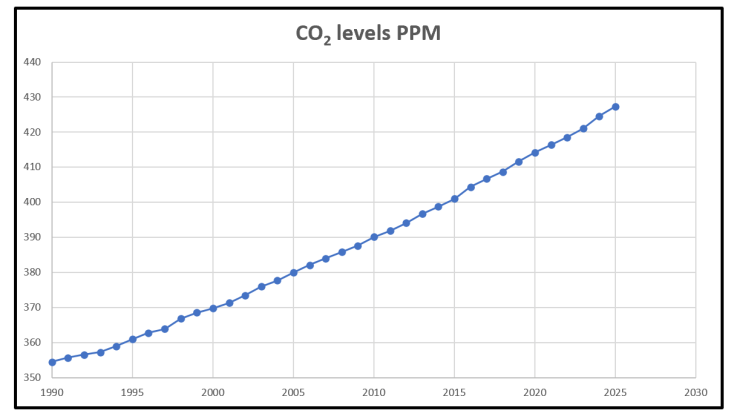
The post reflects on the ongoing challenges of addressing climate change, particularly the failures of international conferences like COP3 and COP21 to effectively curb carbon emissions. Despite some progress, global carbon dioxide levels continue to rise, with projections indicating significant temperature increases if current trends persist. The urgency for meaningful action remains.… Continue reading Will…
-
Correcting Scientific Misconceptions: The December Solstice
I am still surprised how many articles on otherwise reputable websites when writing about scientific topics are riddled with errors and have clearly been written by lazy journalists with no knowledge of the subject they’re talking about. One of the worst examples was an article on the December 2023 solstice which recently appeared on a…
-
December 22 2023 – the solstice

This year, the northern hemisphere winter solstice will fall on 22 December. On this date there are the fewest hours of daylight and, during the day, the Sun reaches its lowest elevation. The origin of the word solstice is from two Latin words: sol, which means Sun, and sistere, to stand still. At the time of the winter…

