With the recent discovery of three planets orbiting the red dwarf star Trappist-1 which have a similar size, mass and average surface temperature as the Earth, there has been considerable speculation as to whether one or more of these planets supports life. What the surface of Trappist 1f, one of the planets orbiting Trappist 1, might look… Continue reading Life in our galaxy?
Tag: Astronomy
Astronomy Items
Enceladus -Could there be life?
Three years ago my first ever post was about Saturn's moon Enceladus. It is interesting that once again this small moon is in the headlines as a possible place on which there could be life. https://www.nasa.gov/press-release/nasa-missions-provide-new-insights-into-ocean-worlds-in-our-solar-system The Science Geek
The Trappist-1 system.
Revised 12 December 2025 Many of you will be aware of the discovery announced back in February 2017 of seven Earth-sized planets orbiting a small cool star known as Trappist-1. (Gillon et al 2017). In this post I'll talk about this exciting finding and the possibility that some of these planets might support life. The planet around… Continue reading The Trappist-1 system.
The equinox March 20 2017
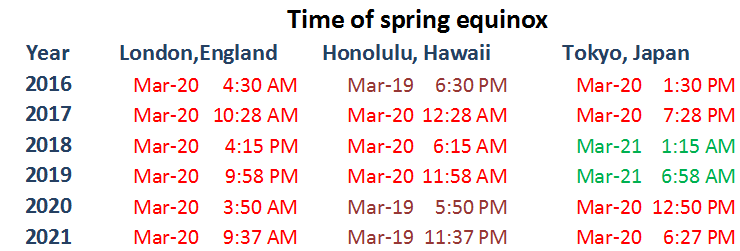
Now that we are in the month of March, for most of us in the northern hemisphere the worst of the winter is over, and it is only a few days until 21 March, the first day of spring. There is a commonly held view that March 21 is the spring equinox and that the equinoxes are the two… Continue reading The equinox March 20 2017
The Evening Star-Venus.
Anybody who has looked up into the western sky after sunset in the past month will have noticed a brilliant white object - the planet Venus, sometimes called the Evening Star. It is brighter than any other planet and ten times brighter than the brightest star Sirius. The "Evening Star" Venus next to the Moon… Continue reading The Evening Star-Venus.
 Explaining Science