These are some of my cosmology posts
-
The Evening Star-Venus.
Anybody who has looked up into the western sky after sunset in the past month will have noticed a brilliant white object – the planet Venus, sometimes called the Evening Star. It is brighter than any other planet and ten times brighter than the brightest star Sirius. The “Evening Star” Venus next to the Moon…
-
Happy New Year 2017
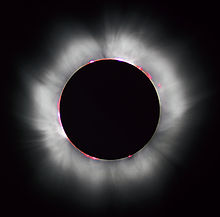
Happy New Year to all my readers and followers. I hope that you all will continue to read and enjoy my blog 🙂 For many people living in the USA the most memorable event of the coming year will not be the inauguration of the new president but the total solar eclipse, which I’ll talk about…
-
Christmas Day – December 25th or January 7th?

Merry Christmas to all my readers and followers and I wish you all a happy New Year. The majority of people who celebrate Christmas Day, whether for religious or cultural reasons or both, do so on 25 December. However, followers of the Orthodox churches generally celebrate Christmas Day thirteen days later, on January 7. The reasons…
-
December 31 2016 Leap Second

On New Year’s Eve an extra second will be added to the end of the day. This extra second is called a leap second. As I’ll explain later, leap seconds need to be added periodically to bring the time we measure with accurate atomic clocks in line with the natural time which results from the rotation of the…
-
An idea for Christmas from Explaining Science
Revised 12 December 2025 Now that Christmas is nearly upon us, if you’ve not done so already why not treat yourself to an e-book from Explaining Science. If you’d like to know more about popular astronomy , I’ve written three e-books which are available in the Amazon Kindle store at a nominal cost. By…
-
Chinese manned space programme
On 18 November two Chinese astronauts, Jing Haipeng and Chen Dong, landed back on Earth after spending 33 days in space, an event which was hardly reported in the western media. During their mission they spent 30 days aboard the Tiangong-2 space station. Image from the Chinese National Space Administration Tiangong-2, shown in the mission patch above, is the second…
-
The long summer evenings
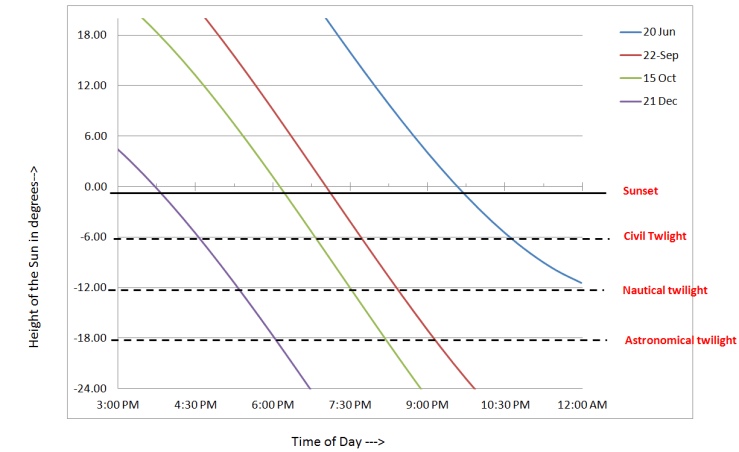
This post talks about two interesting effects to do with the way it get dark after the Sun has set. The first one, which anyone who has travelled to places lying at different latitudes will have seen, is that the closer you are to the equator the quicker it gets dark after the Sun has…
-
What Went Wrong with the Schiaparelli Mars landing
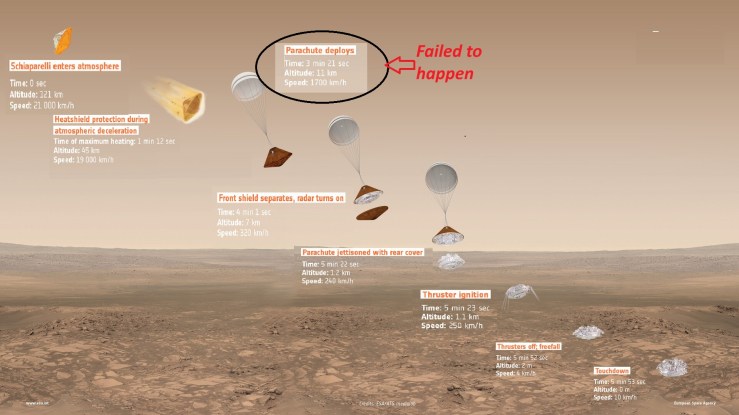
The Schiaparelli probe tragically failed to land on Mars due to its parachute malfunctioning, resulting in a crash at high speed. Despite this setback for the European Space Agency, the ExoMars Trace Gas Orbiter remains successful, set to study methane in the Martian atmosphere, making the overall mission worthwhile.… Continue reading What Went Wrong with…
-
Schiaparelli’s landing on Mars
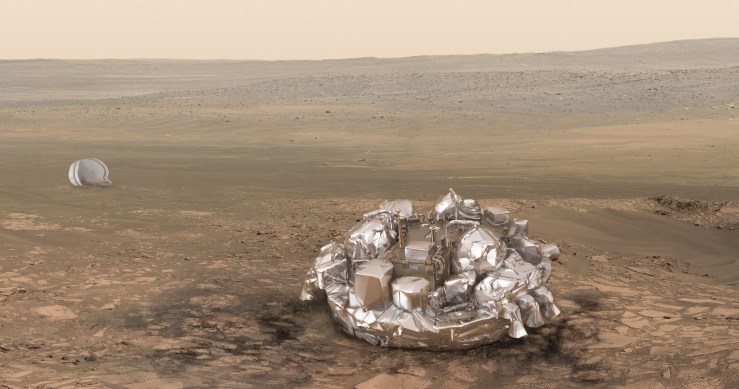
The Schiaparelli Spacecraft tragically failed to land on Mars, crashing at 300 km/h. Launched on March 14, 2016, with the ExoMars Trace Gas Orbiter, it aimed to study Martian surface conditions. It only planned to be operational for a week because it lacked solar panels, relying solely on a non-rechargeable battery.… Continue reading Schiaparelli’s landing…
-
The Three Phases of Twilight Explained
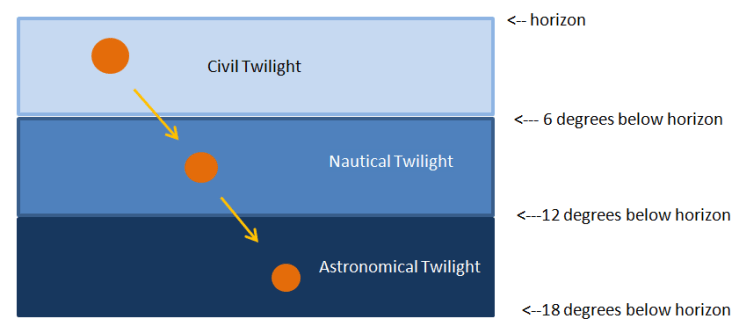
Updated August 2026 Watching the Sun set below the horizon and the sky gradually get darker and darker is an almost magical experience. Twilight is that time of the day, just after sunset, or just before sunrise when the Sun is below the horizon but the sky is not completely dark. It is valued by photographers…

