These are some of my cosmology posts
-
Solar Eclipse 21 August 2017
On August 21, 2017, a total solar eclipse captivated millions across a narrow path in the US, the first since 1979. Although eclipses occur every 18 months globally, total eclipses are rare for any specific location. Factors like the Moon’s orbit affect visibility and duration. … Continue reading Solar Eclipse 21 August 2017 →
-
Discoveries made by Voyager 1 and 2 in the Solar System
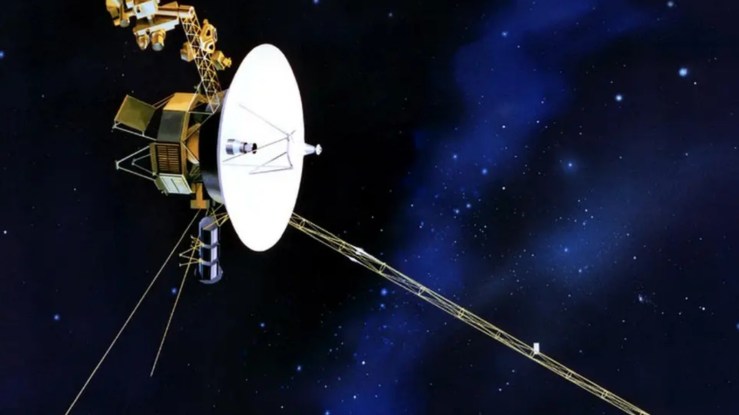
On August 20, 1977, NASA launched Voyager 2 to explore the Solar System’s outer planets, followed by Voyager 1. Both spacecraft made significant discoveries, including active volcanoes on Jupiter’s moon Io and Titan’s dense atmosphere with potential hydrocarbon lakes. They now send data from interstellar space and contain a golden record intended for any potential…
-
The zoo hypothesis
This post is about the zoo hypothesis, a term coined in 1973 by the astronomer John Ball, but the idea had been in existence for decades before then. The zoo hypothesis states that there are many advanced and intelligent alien civilisations out there, but they hide their existence from us so that they they do not interfere with our…
-
Soyuz 50 years on

On 23 April 1967, six years after Yuri Gagarin had became the first man to go into space, a Soviet Soyuz spacecraft was launched carrying cosmonaut Vladimir Komorov. It completed 18 orbits and then returned to Earth. Mission patch for the first Soyuz mission Sadly, during its reentry the parachute failed to open properly and the…
-
Life in our galaxy?
With the recent discovery of three planets orbiting the red dwarf star Trappist-1 which have a similar size, mass and average surface temperature as the Earth, there has been considerable speculation as to whether one or more of these planets supports life. What the surface of Trappist 1f, one of the planets orbiting Trappist 1, might look…
-
Enceladus -Could there be life?
Originally posted on Explaining Science: Welcome Hello and welcome to the first post from the Science Geek 01. I intend to write a weekly blog about various topics of interest, which will cover all aspects of science. The articles will be aimed at the non scientist and won’t require any previous detailed knowledge. I hope you…
-
The Trappist-1 system.
Revised 12 December 2025 Many of you will be aware of the discovery announced back in February 2017 of seven Earth-sized planets orbiting a small cool star known as Trappist-1. (Gillon et al 2017). In this post I’ll talk about this exciting finding and the possibility that some of these planets might support life. The planet around…
-
The equinox March 20 2017

Now that we are in the month of March, for most of us in the northern hemisphere the worst of the winter is over, and it is only a few days until 21 March, the first day of spring. There is a commonly held view that March 21 is the spring equinox and that the equinoxes are the two…
-
Satellite navigation – the next ten years
Satellite navigation is such a vital part of day-to-day life that other countries of the world are planning to build up their own network of navigation satellites and move away from total reliance on the American system, GPS. America As mentioned in my previous post, the GPS system is operated and funded by the US government. The first…
-
Understanding GPS: How Satellite Navigation Works
The Global Positioning System, better known as GPS, has come to affect countless aspects of our daily lives, from directing our holiday aeroplanes to enabling us to drive round an unfamiliar city without any map other than the one on our mobile phone. At the risk of making myself sound like a scary stalker, I…

