These are some of my cosmology posts
-
The Virgin Galactic Experience
The era of mass space tourism is about to begin. Virgin Galactic’s SpaceShipTwo is about to launch. It is based upon SpaceShipOne, which was an experimental spacecraft which won a $10 million dollar prize for being the first privately built spacecraft to travel to an altitude of 100 km. This, as you may remember from my…
-
Space Tourism
This post is about space tourism, which means ordinary people travelling into space for leisure purposes and paying to do so. This is a subject which has always been of great interest to me and although the market is very small at the moment I think it will grow over the coming decades. With the…
-
First Humans on the Moon
Originally Posted July 2014 -Updated April 2026 On 20 July 2014 it was the 45th anniversary of the first crewed Moon landing. To commemorate this. I thought that I’d re-post an earlier article which discussed the first Moon landings. My next article, which I will post next week, will be on the subject of space…
-
Archimedes and the Eureka Moment Explained
.Revised and updated 23 November 2025 Definition of Eureka The Cambridge online English dictionary defines eureka as An exclamation used to show that you have been successful in something you were trying to do. and gives this example “Eureka!” she shouted as the engine started Background Your will recall from my post Understanding the acid test its scientic roots that gold…
-
Living on the Moon.
For centuries novelists have written about humans living and working on the moon. One of my favourite science fiction novels is “A Fall of Moondust” by the British author Arthur C Clarke (1917-2008). It was written in 1961, before man had ventured into space and when we knew very little about the Moon’s surface, but set in the…
-
Chinese Manned spaceflight
Welcome Welcome to the latest post from the Science Geek. The topic of this post, which is part of a series about the Moon, is the Chinese manned space programme. As I said in my last post, sadly it is now nearly 42 years since the last Apollo astronauts lifted off from the Moon’s surface…
-
Manned Missions to the Moon
Welcome Welcome to the latest post from the Science Geek. This post, which is part of a series on the Moon, discusses manned exploration of the Moon. I hope you enjoy reading it and, as always, please let me know if you have any comments. I would also like, once again, to thank Mrs Geek…
-
The Days are Getting Longer
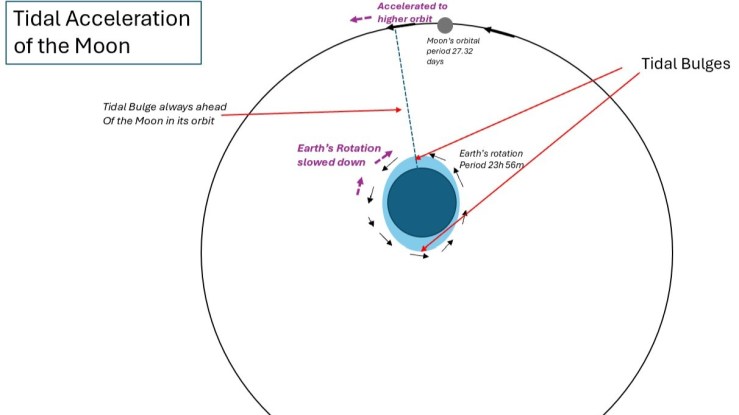
The Moon’s gravitational influence creates tides on Earth, with tidal bulges occurring on both sides of the planet. This interaction gradually slows Earth’s rotation, lengthening days and causing the Moon to drift away at about 3.8 cm per year. Past proximity may have facilitated the emergence of early life due to stronger tidal forces.… Continue…
-
The Moon – Our Nearest Neighbour
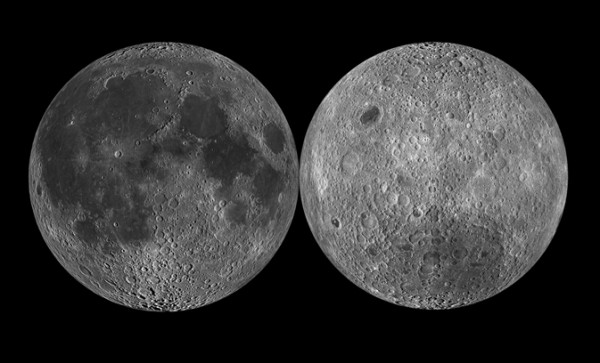
The Moon, Earth’s closest neighbor, has captivated humanity for centuries, with its distinct phases observable over a 29.5-day cycle. While it appears similar in size to the Sun, its distance affects visibility during eclipses. The enigmatic far side remains a source of mystery and conspiracy theories, revealed only through space exploration.… Continue reading The Moon…
-
Pluto may be wearing a dark belt of moon dust
Originally posted on ScienceQ publishing Group: On far-flung Pluto, it may be raining moon dust. Models suggest that Pluto’s small moons are even now sprinkling dust on its equator, which could explain why Pluto’s middle is darker than its poles. A NASA spacecraft headed for Pluto’s neighbourhood should be able to check out the claim…

