Updated January 19 2026 The move away from the prevailing Earth-centred theory of the Universe to the heliocentric theory published in 1543 by Nicolas Copernicus, represents one of the greatest advances in astronomy ever made. Nicolas Copernicus - Image from Wikimedia Commons Problems with the Geocentric Theory The Geocentric theory of the Universe was the… Continue reading The Impact of Copernicus on Astronomy
Author: Steve Hurley
Hi I am Steve Hurley. Although I work in the IT industry. I studied for a PhD in astronomy in the 1980s. My real passion is explaining scientific concepts to a non-scientific audience. My blog (explainingscience.org) covers various scientific topics, but primarily astronomy. It is written in a style that it is easily understandable to the non scientist.
Publications and videos
For links to my books and videos please visit www.explainingscience.org
Geocentric Cosmology
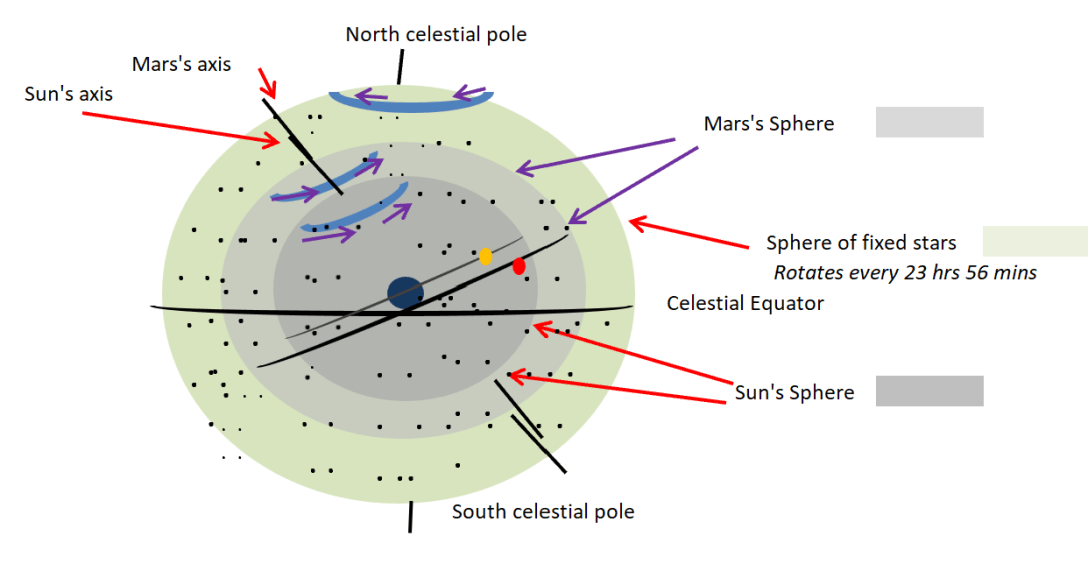
Revised March 2026 Today it is generally accepted fact that the Earth is one of eight planets which revolve around the Sun, that the Sun is one of 400 billion or so stars in our Milky Way galaxy and that the Milky Way is one of hundreds of billions of galaxies in the observable Universe.… Continue reading Geocentric Cosmology
The early days of the space race
In my previous post I talked about two significant successes for the Soviet Union in 1957: the first artificial satellite in orbit in October and the first living creature, a dog named Laika, in orbit in November. In December of that year the Americans had a humiliating failure when the Vanguard spacecraft exploded in a… Continue reading The early days of the space race
4 October 1957 – the start of the space age
Updated 16 December 2025 On 4 October 1957, the Soviet Union launched the first artificial satellite, Sputnik 1, into orbit around the Earth. This is considered to be the beginning of the space age. Before this date there were no human made satellites in space but on every single day since then there have been artificial… Continue reading 4 October 1957 – the start of the space age
The discovery of pulsars 1967
Updated 14 December 2025 In 1967, a 24-year-old student from Cambridge University, Jocelyn Bell, was doing the research for her PhD. She was using a radio telescope to study radio waves emitted from compact astronomical objects known as quasars, and when she analysed the data she had collected, she noticed a signal which appeared to… Continue reading The discovery of pulsars 1967
 Explaining Science