
Surveying the Cosmos – Part I

In this post I'm going to talk about a new 500 million dollar telescope,  the Large Synoptic Survey Telescope (LSST), being built at Cerro Pachón in Chile,  and the survey of the cosmos it will  be undertaking over a 10 year period. Cerro Pachón is located in the foothills of the Andes at a latitude… Continue reading Surveying the Cosmos – Part I
Dark Sky Places

In this post I will talk about the work of the International Dark-Sky Association (https://www.darksky.org/)and the visit I made a few years ago to the Kielder Observatory, which is in the Northumberland Dark Sky park in northern  England. The International Dark-Sky Association (IDA) was founded in 1988 by David Crawford a professional astronomer, who spent… Continue reading Dark Sky Places

The Goldbach Conjecture

The Goldbach conjecture, posed in 1742, asserts that every even number greater than 2 can be expressed as the sum of two prime numbers. Despite exhaustive verification for even numbers up to four quadrillion, no proof exists for all even integers. A million-dollar prize for a solution remains unclaimed.

The Science Geek is now Explaining Science

When I started my Science Geek blog back in April 2014, I never expected it still to be up and running five years later.  Over these five years its popularity has gradually increased, and I now have around 2,300 followers.   However, after five years of blogging I feel now that it is time for… Continue reading The Science Geek is now Explaining Science

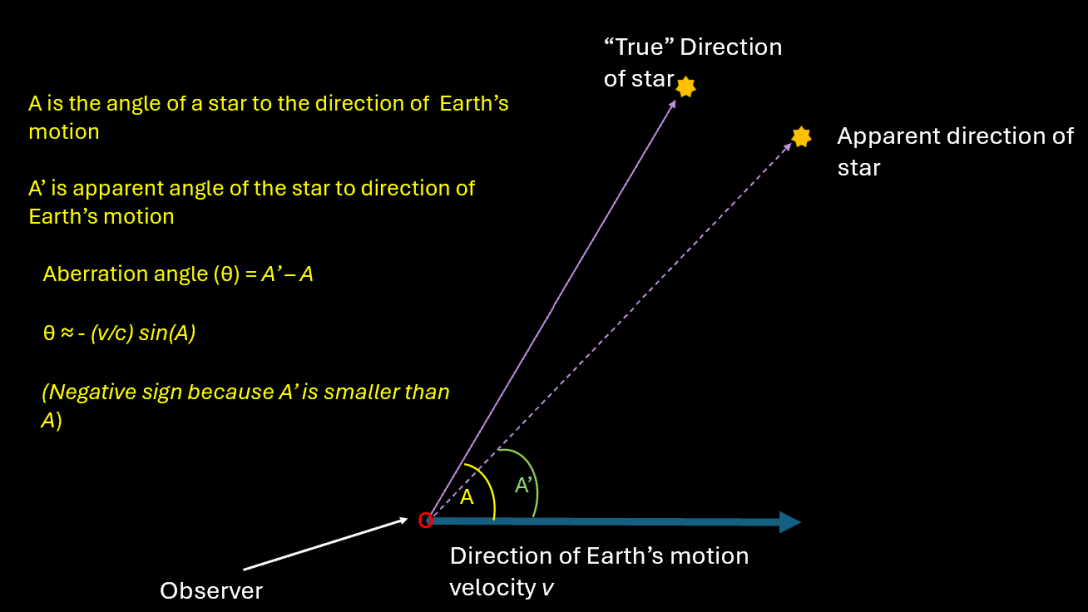
The Impact of Stellar Aberration on Astronomy and the Speed of Light Measurement

Stellar aberration was discovered by James Bradley in 1727. He observed unexpected star position shifts, confirming the heliocentric theory and enabling light speed measurement. Today, it's explained by Einstein's theory of relativity.