The 2017 total solar eclipse attracted massive attention, with approximately 200 million Americans within driving distance of its path. An estimated 7 million travelers joined 12 million others witnessing the eclipse. This event marked one of the largest human migrations for a natural phenomenon, enhanced by unprecedented social media coverage.
Tag: Moon
Solar Eclipse 21 August 2017
On August 21, 2017, a total solar eclipse captivated millions across a narrow path in the US, the first since 1979. Although eclipses occur every 18 months globally, total eclipses are rare for any specific location. Factors like the Moon's orbit affect visibility and duration.
The Evening Star-Venus.
Anybody who has looked up into the western sky after sunset in the past month will have noticed a brilliant white object - the planet Venus, sometimes called the Evening Star. It is brighter than any other planet and ten times brighter than the brightest star Sirius. The "Evening Star" Venus next to the Moon… Continue reading The Evening Star-Venus.
Chinese manned space programme
On 18 November two Chinese astronauts, Jing Haipeng and Chen Dong, landed back on Earth after spending 33 days in space, an event which was hardly reported in the western media. During their mission they spent 30 days aboard the Tiangong-2 space station. Image from the Chinese National Space Administration Tiangong-2, shown in the mission patch above, is the second… Continue reading Chinese manned space programme
The Three Phases of Twilight Explained
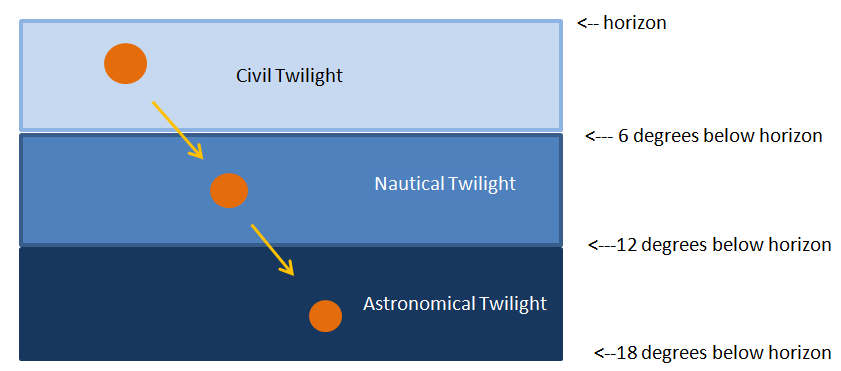
Updated 10 January 2026 Watching the Sun set below the horizon and the sky gradually get darker and darker is an almost magical experience. Twilight is that time of the day, just after sunset, or just before sunrise when the Sun is below the horizon but the sky is not completely dark. It is valued by… Continue reading The Three Phases of Twilight Explained
 Explaining Science