These are some of my cosmology posts
-
Easter April 4 2021
This year, for the majority of the world’s Christians, 4 April is Easter Sunday, one of the most important dates in the calendar. Although because of the current restrictions due to the Covid pandemic, celebrations will be a little limited in many places. Although Easter is the festival celebrating the resurrection of Jesus Christ from the dead,…
-
Distances in Cosmology
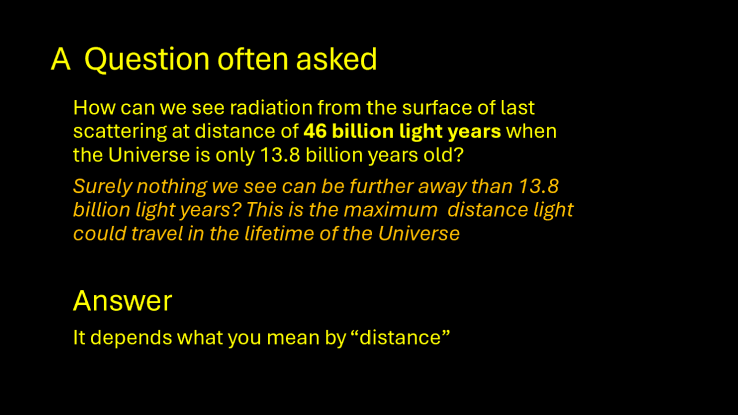
Discusses the nuances of distance measurement in cosmology., focusing on the cosmic microwave background (CMB) and its proper distance of 46 billion light years from Earth. It clarifies concepts such as light travel distance, proper distance, comoving distance, and various astronomical distance metrics, emphasizing the expansion of the Universe… Continue reading Distances in Cosmology →
-
Advancing the Clocks
On the early hours of Sunday 14 March 2021, most of the United States will put their clocks forward an hour and Daylight Saving Time (DST) will commence. Two weeks later on 28 March most countries in Europe (including the UK) will follow, switching to summer time. In this post I’ll talk about the practice…
-
Solar Sails
Update 21 September 2025 As this is a changing area, I have replaced this post from 2021 with a revised and updated one. This is available at https://explainingscience.org/2025/09/21/solar-sails-fuel-free-space-travel/ I have also created a video which goes into solar sails in much more detail
-
Human spaceflight in 2021

2021 will be an interesting year for human space flight. Not only is it the sixtieth anniversary of Yuri Gagarin’s historic first manned spaceflight, but it will be the first time that a privately operated spacecraft will arrive at the International Space Station (ISS). This private spacecraft is not just a one-off but will be…
-
Chinese Moon samples
Like many of my readers I was pleased to see that the Chang’e 5 spacecraft returned to Earth on 16 December 2020 with around 2 kg of lunar rocks. This great achievement was the first lunar sample return mission for China and is indeed the first time any rocks have been brought from the Moon…
-
Dark energy an unexpected finding
I offered recently to write an article for my local astronomy society on the discovery of dark energy. It is an expanded version of the blog post I wrote on the topic last year and, at over 3000 words, it is longer than my usual posts. I thought it would be of interest to many…
-
Arecibo Update
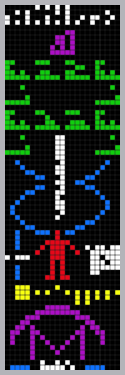
Since the publication of this post on 2 December 2020 it appears that Arecibo observatory may be rebuilt. Although the $8 million pledged by the Puerto Rico Rico government is clearly not enough https://www.engadget.com/puerto-rico-approves-8-million-to-rebuild-arecibo-telescope-155454170.html I was saddened to see that the Arecibo Observatory in Puerto Rico has closed following catastrophic damage to its cables and…
-
Why Haven’t We Heard from Aliens?
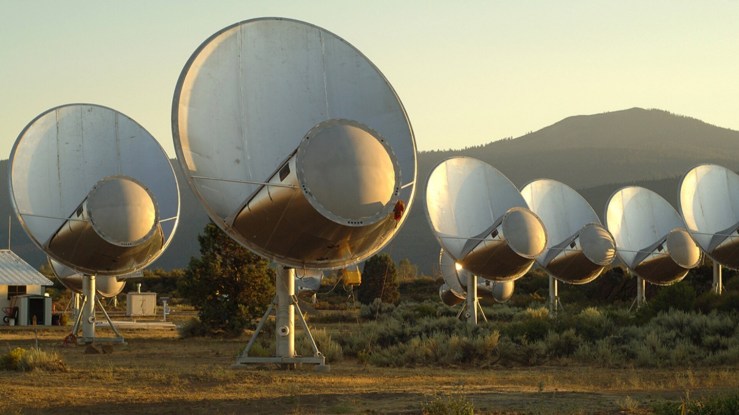
Interest in the Search for Extra-Terrestrial Intelligence (SETI) has risen, highlighted by the Allen Telescope Array. Despite decades of searching for alien signals, no evidence has been found, which may be due to the rarity of intelligent life, communication methods, or missed signals. Some theories suggest advanced civilizations may self-destruct or remain undetected.… Continue reading…
-
The changing pole star
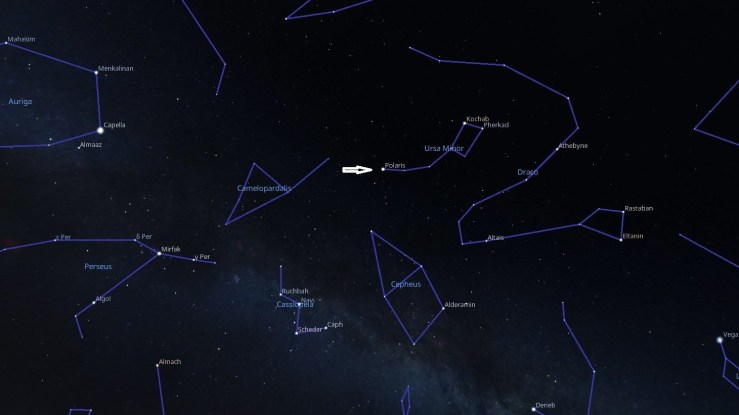
Polaris, commonly known as the pole star, is situated near the North Celestial Pole and has been used for centuries for navigation. But Polaris hasn’t always been the Pole Star and won’t be in future. This is gradually changing over a 25 800 year cycle.… Continue reading The changing pole star →
 Explaining Science