
Updated June 2026
In this post I’ll talk about the history of the International Space Station (ISS) and some of the other space stations which have been constucted over the years. I’ll also touch on some of the politics involved.
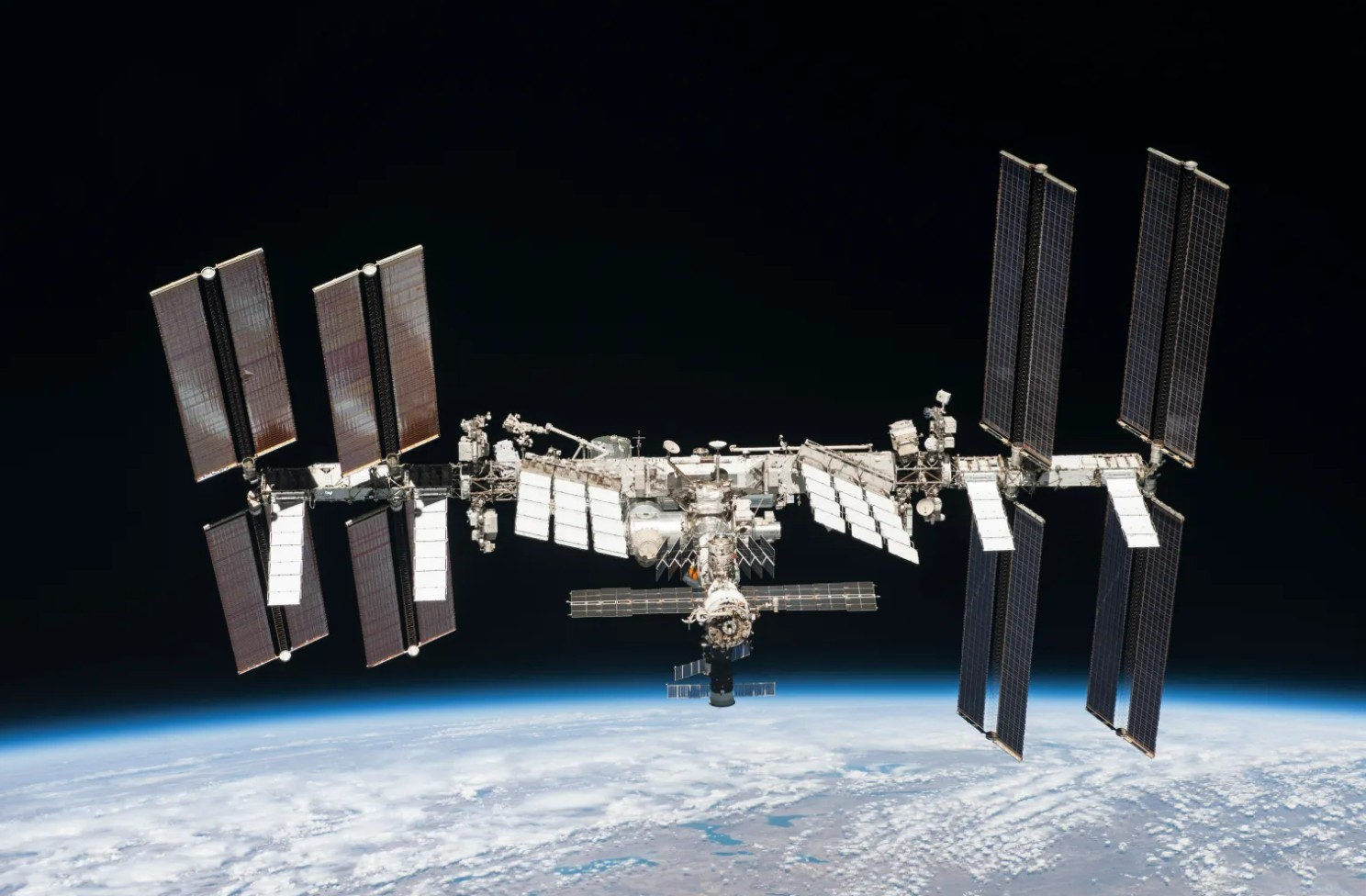
The International Space Station Image from NASA
The First Space Stations
Although America was the first country to put a man on the Moon, the Soviet Union led the way in long duration spaceflights and was the first country to launch a space station, in which humans could live and work for longer periods of time. Before the advent of space stations, astronauts were confined to cramped space capsules.
The first ever space station Salyut 1 was launched into space in April 1971. It weighed nearly 20 tonnes and had a pressurised volume of 100 cubic metres, in which cosmonauts could live and work. This was vastly more than previous spacecraft. For comparison, the command module in which the three Apollo astronauts made their journeys to the Moon had a pressurised volume of only 6.2 cubic metres. Salyut was a single module space station; the entire structure was launched into orbit at once. There was no in-orbit assembly.

A Soviet Soyuz spacecraft about to dock with Salyut – image from NASA.
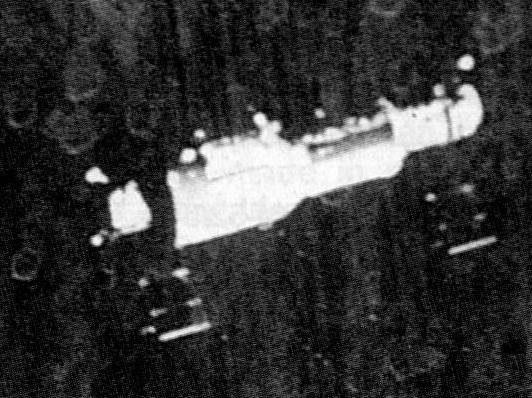
Note: An actual photo of Salyut 1 in orbit, taken by one of the Soyuz 11 cosmonauts as he departed, can be viewed at: http://www.astronautix.com/graphics/s/sal1foto.jpg
Three cosmonauts from Soyuz 11 visited Salyut 1 during the following June and stayed there for a record breaking 24 days. Sadly, the mission ended in a tragic accident. In the early Soyuz spaceflights, the capsule the cosmonauts returned to Earth in was so small that there wasn’t enough room for them to wear bulky spacesuits and the associated life support equipment. This unfortunately led to the deaths of the Soyuz 11 cosmonauts during re-entry into the Earth’s atmosphere. Although the spacecraft landed back on Earth successfully, the cosmonauts died from lack of oxygen when a faulty valve caused all the air to escape from their capsule. Had they been wearing spacesuits they would have survived.
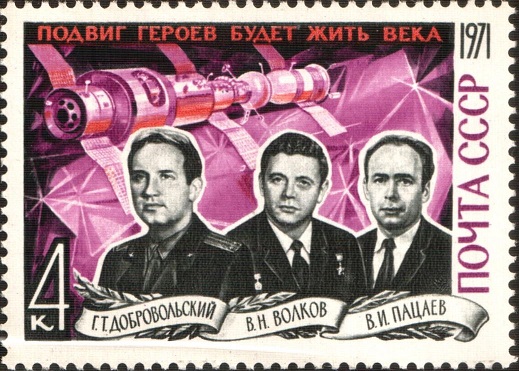
Commemorative Soviet four kopek stamp showing the Soyuz 11 spacecraft docked to Salyut 1 and the ill-fated crew.
After Salyut 1, the Soviets launched six further Salyut space stations, the final one Salyut 7 was launched in 1982. Salyut 6 and Salyut 7 had an additional docking port to allow uncrewed spacecraft to bring supplies. This enabled cosmonauts to stay in the station for longer durations. Cosmonauts in Salyut 6 and 7 could remain in space for up to seven months at a time.
In 1973 the American launched their own space station, Skylab. Like Salyut, Skylab was a single module structure requiring no assembly in orbit. Skylab was visited by three separate missions and the final crew stayed for 84 days. After the last crew had left, Skylab was abandoned and America launched no further space stations. With a limited budget, the focus of the American human spaceflight programme was on developing the Space Shuttle.
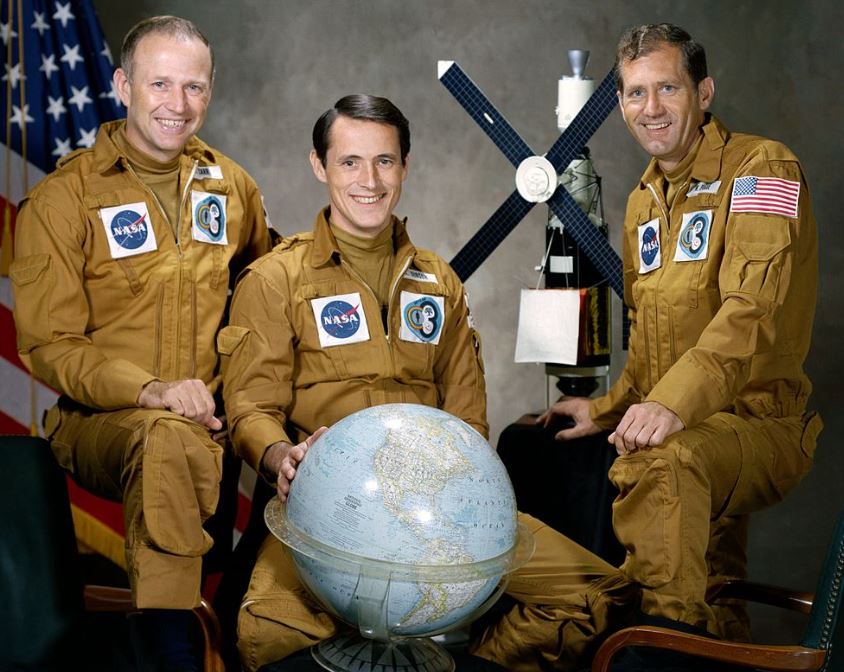
The final Skylab crew – image from NASA. A model of Skylab is in the background.
The Soviet Space Station Mir
In 1986 the next advance in space station design took place when the Soviet Union launched Mir. Mir was too large to launch into orbit in one go. It was assembled from seven different modules, each launched into orbit separately. Between 1986 and 2000 twenty-eight different crewed spacecraft visited Mir. In a new era of international collaboration Mir was visited by travellers from nations other than the Soviet Union. The record for the longest time a human has spent continuously in space, 438 days, was set aboard Mir in 1994 -1995 by Valeri Polyakov and still stands today. I suspect that, as more becomes known about the negative effects of long duration spaceflight on the human body, this record will not be beaten for a long time.

Mir-image from NASA
The Proposed Space Station – Freedom
During the early 1980s many in the US government were concerned that the Soviet Union was clearly ahead of America in long-duration crewed spaceflight. At this time, the NASA Space Shuttle programme was well over-budget, years behind schedule and the shuttle could only support astronauts staying in space for a few weeks. In his 1984 State of the Union address, President Ronald Reagan announced that America would built its own space station within the decade. It was later given the name ‘Freedom’, and was intended to give America a permanent human presence in space.
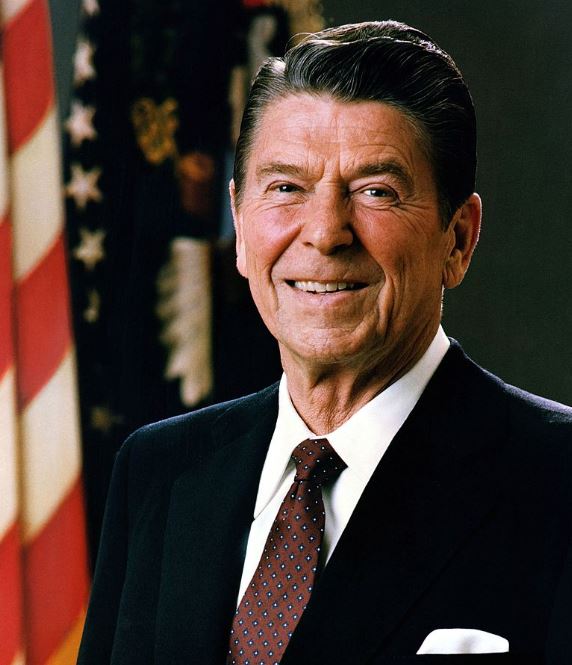
Image from Wikimedia common
Large space programmes nearly always turn out to be more complex and expensive than initially expected. When Reagan made his announcement, America had already committed a large amount of money to the Space Shuttle programme, which would eventually cost, in 2026 dollars, over $200 billion. During the late 1980s and early 1990s, as design work on Freedom proceeded, the costs began to escalate, and the deadlines slipped. To try and bring the project back on track its scope was cut and, to reduce the cost to the US taxpayer, discussions were had with Europeans nations about bringing them in as partners. In the end, Congress would not approve the money to carry Freedom forward and the project was stopped.
The International Space Station
However, by the early 1990s the political climate had changed, with the end of the Cold War and the Soviet Union having ceased to exist. So, rather than being rivals in space, the Russian and American governments decided in 1993 to collaborate in the building of the next space station which became known as the International Space Station (ISS). They were joined by Japan, Canada, Brazil and the countries from the European Space Agency (ESA).
January 29, 1998 was an important milestone for the International Space Station. On this date senior government officials from 15 countries met in Washington and signed agreements establishing the framework for cooperation on the design, development and operation of the International Space Station.

Image from NASA
As discussed in The ISS a Milestone for Humans in space, in November 1998 which was only ten months after the agreement had been signed Russia launched the first module of the ISS, Zarya.
In December 1998, a the first astronauts arrived at the ISS on the Space Shuttle. They attached American Unity module, carried on the shuttle, to Zarya. Because they were there to build, not to live in the ISS, they only stayed a few days. Multiple short-term Space Shuttle assembly crews followed over the next two years before the first long duration crew (known as Expedition 1) arrived on 2 November 2000. Since that. date the ISS has been continuously crewed. Providing a permanent human presence in space.
Long duration crew (known as expeditions) typically stay on the ISS for around 6 months. A total of 290 different individuals have visited from 26 different countries. [1]
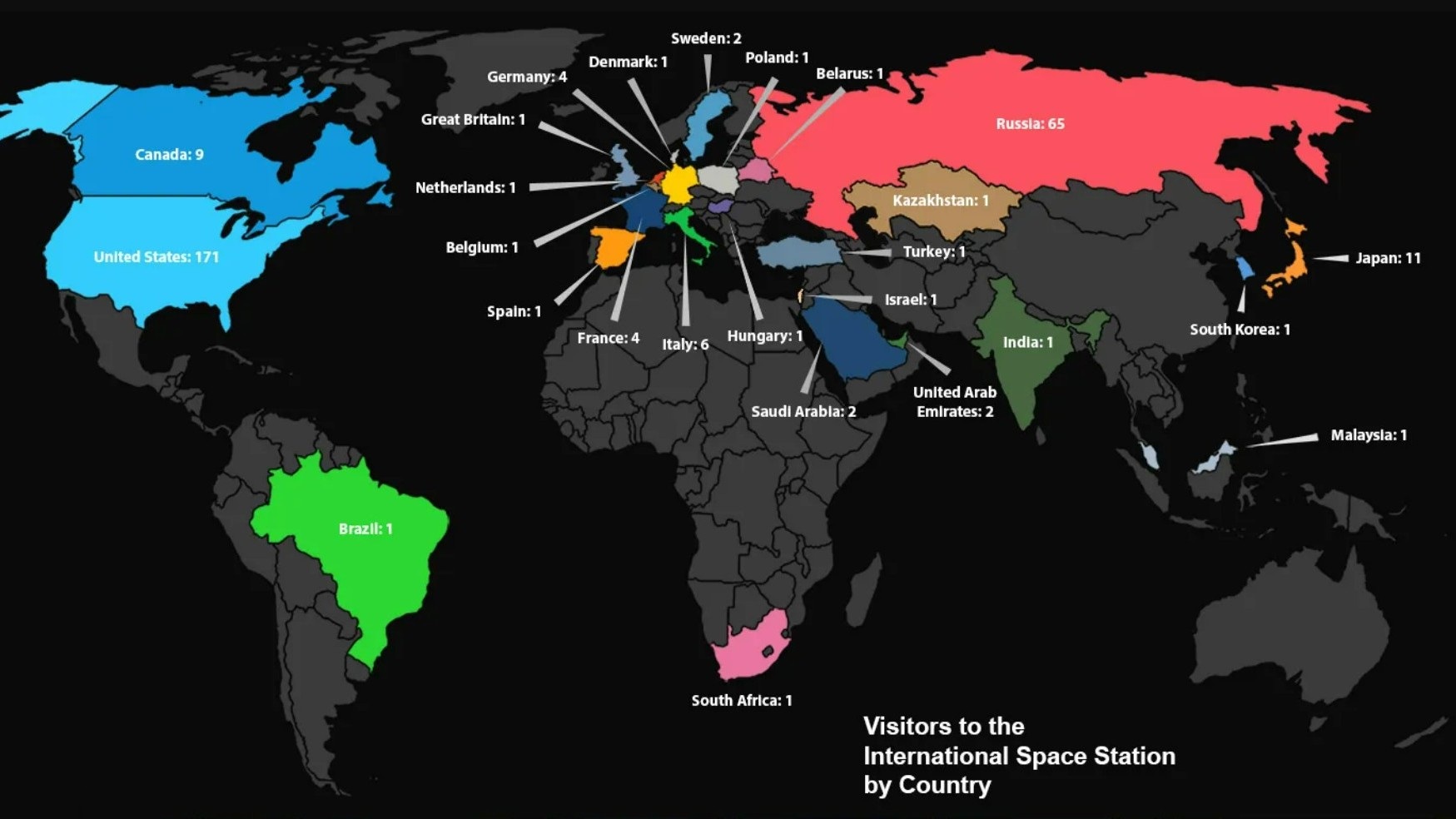
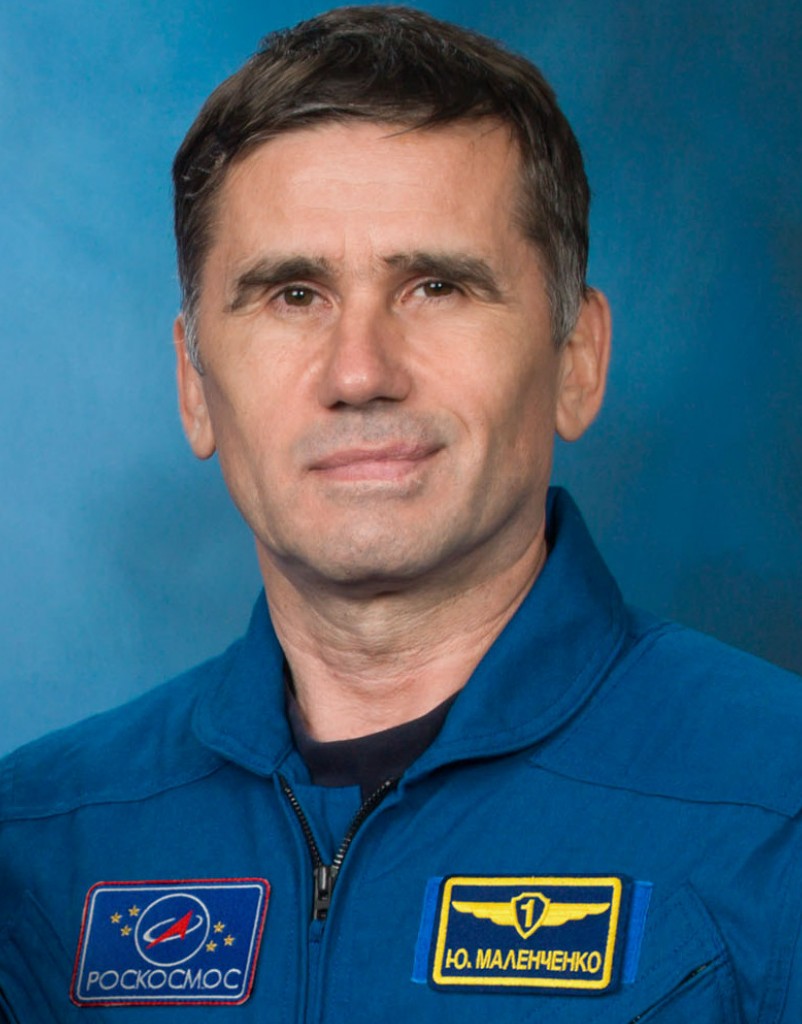
A number of these individuals have been fortunate enough to have visited the ISS two or more times. The Russian cosmonaut Yuri Malenchenko shown below, holds the record for most visits. He made a short visit in September 2000 before the ISS was permanently crewed and later stayed at the ISS on four separate long term expeditions.
The United States’ Policy on cooperation with China in Space
One country missing from the list of countries involved in the ISS is China. From the beginning, at American insistence, it has been excluded from any participation in the ISS. The justification being that America fears the military nature of Chinese activities in space. In 2011 Congress passed a law prohibiting official American contact with the Chinese space program, citing national security concerns. [2] This policy has hardened over recent years and NASA currently prohibits any of its engineers or scientists from working with China. As a result, China is developing its own space station as part of its human spacefli ght programme. It launched two small single module space stations, Tiangong-1 in 2011 and Tiangong-2 in 2016, which were visited by Chinese astronauts.
Since 2021, China also has it own modular space space station The Tiangong Space Station and although so far it has only been crewed by Chinese astronauts, China is looking to partner with other nation. In the next few years it is likely that Tiangong may be visited by astronauts from other countries. International cooperation took a step forward in when in 2025 China and Pakistan made an agreement to send a Pakistani astronaut to the ISS [3] , athough there is not yet any firm date for when this will happen.
The High Costs of the ISS
One criticism often levelled at the ISS is its high running costs. The vast majority of which are paid for by the American taxpayer. The annual operating cost of the ISS was estimated in a 2021 NASA report as $3 billion per annum ( equivalent to $3.7 billion per annum in 2026 dollars), which was rough one third of NASA’s human spaceflight budget.
However, the total costs of building the International Space station are complex to estimate. This is for several reasons:
- Spending on the early design work on Freedom, some of which eventually became re-used in the ISS, started in 1985. It is unclear how much of this early work should be included. Also, this spending in the earlier years needs to be heavily adjusted upwards for inflation.
- Much of the ISS was built by ferrying components with the Space Shuttle. So, in addition to the costs of the components, the costs of the 36 Shuttle missions, which cost $1.6 billion EACH, should be taken into account.
- The total contribution by the Soviet Union, and its successor state Russia, is unclear.
An article on the ESA website in 2013 [5] quoted a figure of 100 billion Euros but does not give any breakdown of how it was arrived at. It estimated the European share at 8 billion Euros (roughly $10 billion)
When the ISS was nearing completion a study by Lafleur in 2010, often quoted by the US media, estimated that the total cost (in 2010 dollars) of the ISS from 1985 to 2015 would be $150 billion. This equates to $230 billion adjusted for inflation in 2026 dollars.
Lafleur broke down his figure as follows. All the numbers are in 2010 dollars
- $12 billion from Russia
- $5 billion from Europe (about half the figure quoted on ESA website)
- $5 billion from Japan
- $2 billion from Canada
- $124 billion from the US, which includes $50 billion for the 36 Shuttle flights
Although Brazil signed the ISS treaty, it later withdrew from the programme and Lafleur ignored its small contribution.
I think that although the true cost of ISS will never be accurately known, one thing that it is certain is that it is the most expensive single structure ever built by humankind!
References
[1] NASA (2026). International Space Station Visitors by Country – NASA. [online] NASA. Available at: https://www.nasa.gov/international-space-station/space-station-visitors-by-country/. (Accessed 4 June 2026)
[2] Congress.gov. (2012). DEPARTMENT OF DEFENSE AND FULL-YEAR CONTINUING APPROPRIATIONS ACT, 2011 Available at: https://www.congress.gov/112/plaws/publ10/PLAW-112publ10.htm. (Accessed 4 June 2026)
[3] He, F. and Saifi, S. (2025). Pakistani astronaut will become first foreign national to enter Chinese space station. [online] CNN. Available at: https://edition.cnn.com/2025/04/24/science/china-space-station-pakistani-astronaut-intl-hnk. (Accessed 4 June 2026)
[4] NASA (2021). Office of Inspector General Office of Audits NASA’S MANAGEMENT OF THE INTERNATIONAL SPACE STATION AND EFFORTS TO COMMERCIALIZE LOW EARTH ORBIT. [online] Available at: https://oig.nasa.gov/wp-content/uploads/2024/02/IG-22-005.pdf. (Accessed 4 June 2026)
[5] The European Space Agency (2013). How Much Does It cost? [online] http://www.esa.int. Available at: https://www.esa.int/Science_Exploration/Human_and_Robotic_Exploration/International_Space_Station/How_much_does_it_cost. (Accessed 4 June 2026)
[6] Lafleur, C. (2010). The Space Review: Costs of US piloted programs. [online] http://www.thespacereview.com. Available at: https://www.thespacereview.com/article/1579/1. (Accessed 4 June 2026)
Discover more from Explaining Science
Subscribe to get the latest posts sent to your email.


[…] talked about in a previous post, China has already efficiently launched two small house stations, Tiangong 1 and a pair of, which […]
LikeLike
[…] talked about in a previous post, China has already efficiently launched two small house stations, Tiangong 1 and a pair of, which […]
LikeLike
[…] talked about in a previous post, China has already efficiently launched two small house stations, Tiangong 1 and a pair of, which […]
LikeLike
[…] mentioned in a previous post, China has already successfully launched two small space stations, Tiangong 1 and 2, which have been […]
LikeLike
[…] via Space stations past and present […]
LikeLike
I always thought it was odd that China was excluded from the I.S.S. I wasn’t aware that their space program had a strong military component, but if that’s true I guess it makes a little more sense.
LikeLiked by 1 person
There was a wonderful video going around a while back that showed the ISS right from the beginning and all the parts coming together to form the whole. 😀
LikeLike
Sound great!
Would you be able to to forward me the link
LikeLiked by 1 person
Here you go … https://www.youtube.com/watch?v=h8kOAroNNAo
LikeLiked by 1 person
Thanks for all that! We have Tim Peake’s capsule at Peterborough at the moment (until November) in an exhibition.
LikeLike
Great ! Just of our interest have you been able to see it?
LikeLike
Reblogged this on .
LikeLiked by 1 person
The lifetime cost of the ISS (construction and operation) is unquestionably going to be immense – probably the larger proportion is the construction. Another comparison I’m wondering about is the cost of the ISS as a percentage of the wealth (GDP) of the nations that contributed – obviously almost impossible to calculate for the reasons you’ve outlined. However, even an estimate would enable a rough comparison with (say) the cost to the Egyptians of building the pyramid of Cheops, versus the total economy of Egypt at the time, or of Göbekli Tepe to the people who built it (as they were likely hunter-gatherers, that’s probably huge as a proportion of their available surplus).
LikeLiked by 1 person
An interesting point.
The other thing to bear in mind is that each year the ISS remains in orbit, NASA allocates roughly half of its total human space flight budget to ISS operations. – This limits the its ability to fund development of systems needed to visit destinations beyond low Earth orbit.
LikeLike
[…] Source link […]
LikeLike