Updated 7 December 2025
I have extensively expanded and rewritten all three “A Short Guide to…” e-books.
These books available on Kindle for a competitive price I hope you enjoy reading the new versions of these books (if you’ve not done so already).
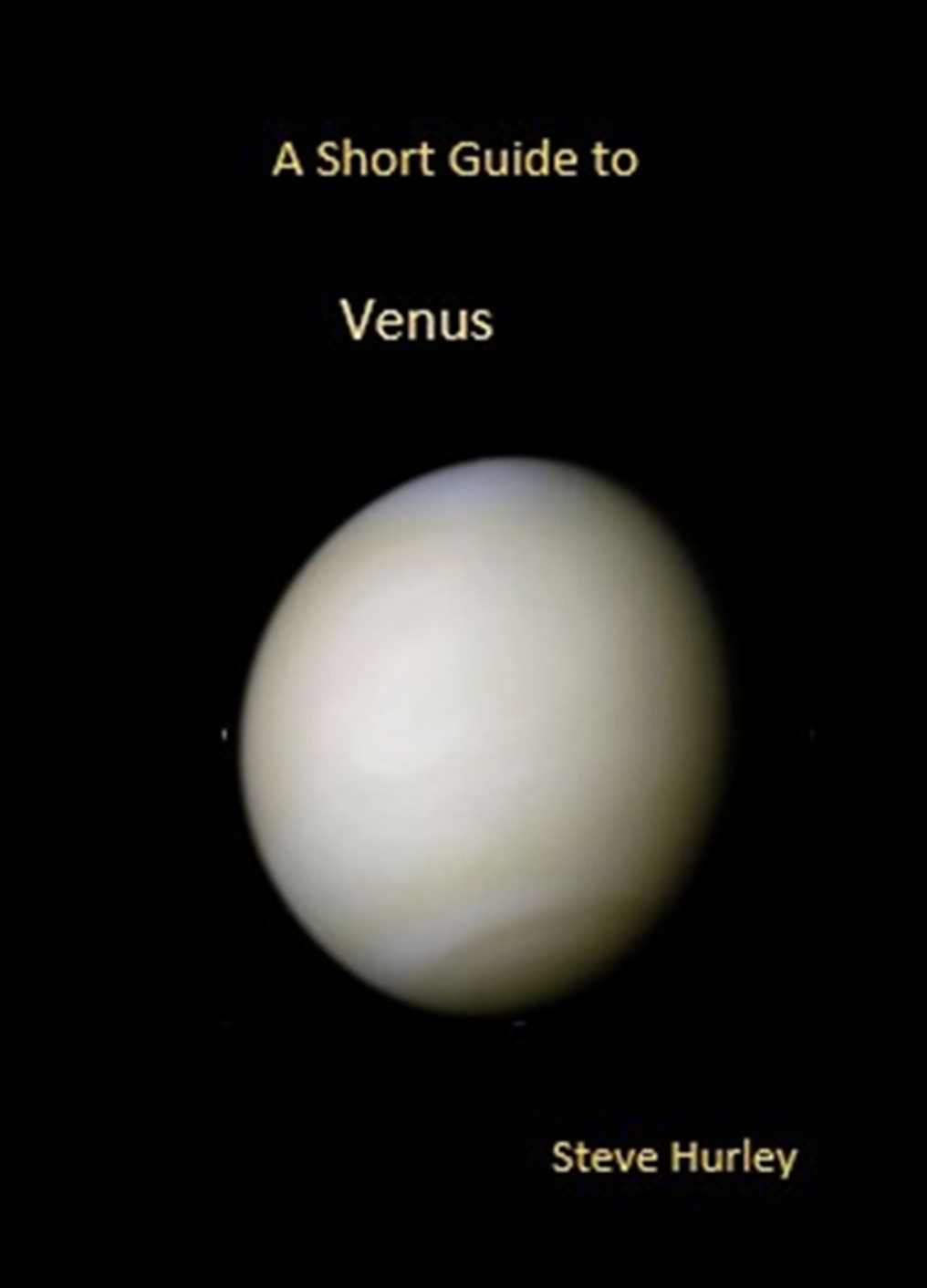
Venus is, the planet closest to the Earth in size and internal composition, and the brightest natural object in the sky after the Sun and the Moon. This e-book covers most of the main areas about Venus.
- Why is it so bright? The 584-day cycle where Venus goes through a full set of phases. Its phases can only be explained by a heliocentric theory and not the geocentric theory, something which was very important to the development of astronomy.
- Exploration of the Venus by spacecraft revealing a harsh hostile world.
- The ‘transit of Venus’ .Observations of this were important to the development of astronomy in the seventeenth and eighteenth centuries.
- The latter part of the book is more speculative discusses what humans would need to do to live on Venus. The idea of ‘floating cities’ is discussed and terraforming the entire planet is explored.
To find out more click on A Short Guide to Venus e-book
Other Posts on Venus
There are a series of Explaining Science posts on Venus. These include:
- Why is Venus so bright compared to other planets
- How Venus appears from the Earth, its phases and the 584 day cycle
- Terraforming Venus so that humans could live and work there.
- Could humans live in the Venusian atmosphere? And why would they want to?
- The Transit of Venus

 Explaining Science
[…] Source link […]
LikeLike
[…] Source link […]
LikeLike
[…] via Free e-book on Venus and how to Terraform it — Explaining Science […]
LikeLike