
Mars is often portrayed in science fiction as an environment in which humans will explore, live, work and eventually colonise. Recently SpaceX founder Elon Musk stated his goal to build a self-sustaining city on the red planet.
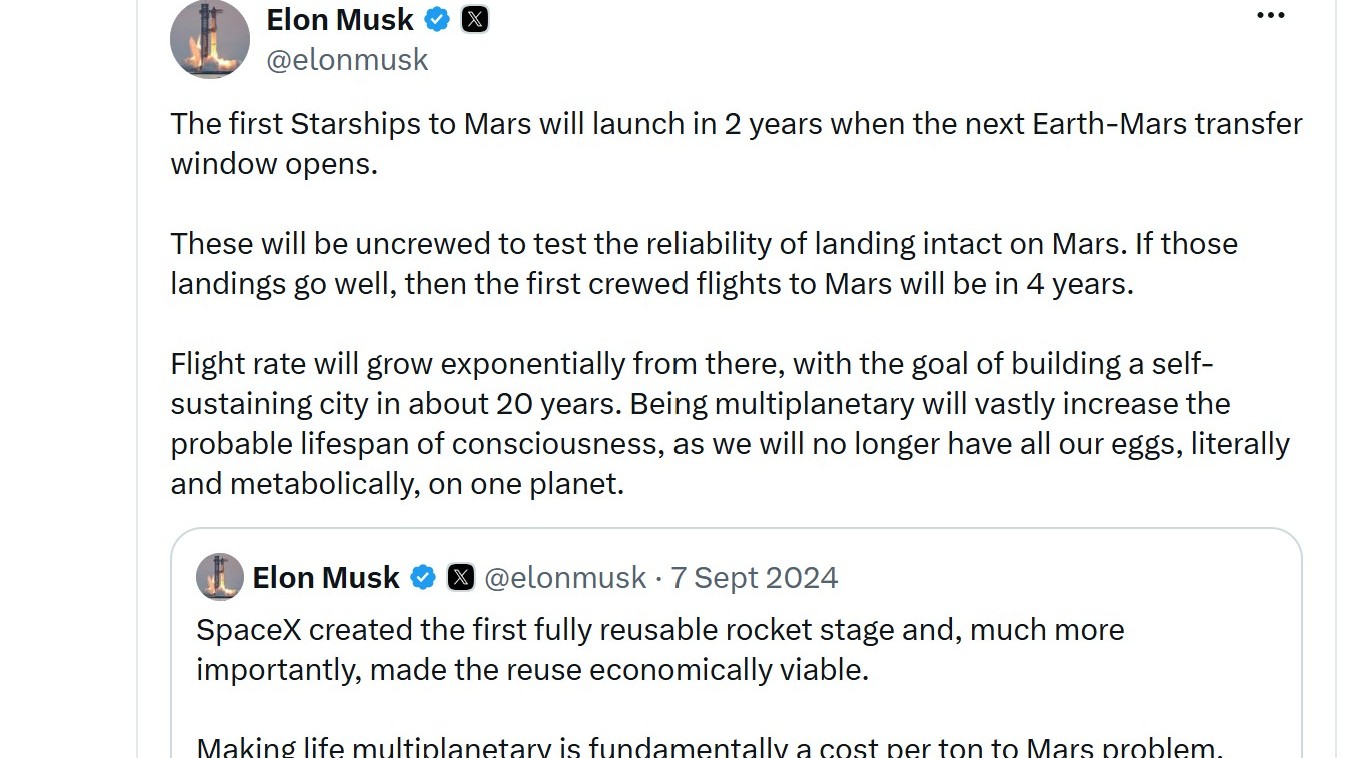
Indeed, pictures from the Martian surface suggest an environment similar to the dry desert regions on Earth. But in reality, Mars is an extremely harsh environment. It has a very thin atmosphere; a human would need to wear a pressurised space suit to survive. Compared to Earth it is very cold. It has no magnetic field to shield its surface from deadly charged particles. Martian soils contain high levels of toxic perchlorates, and its gravity is only 38% of that of Earth. In this post I’ll talk about some of the challenges of living on Mars.
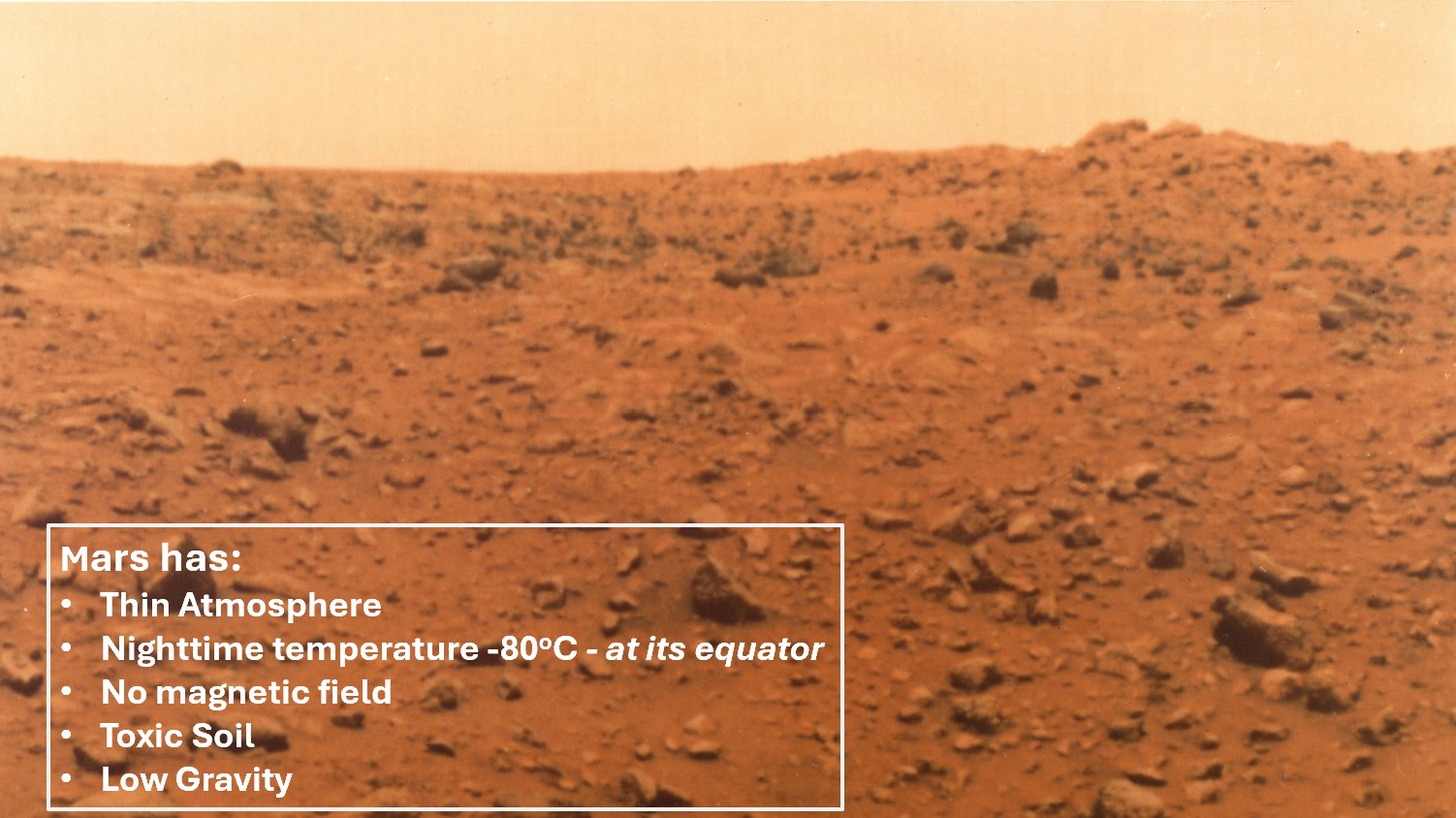
What is the Martian Atmosphere like?
The chemical composition of the Martian atmosphere is very different to the Earth’s, being made up of 95% carbon dioxide. Its mean surface pressure at 6.36 millibars is only 0.6% of the Earth’s.
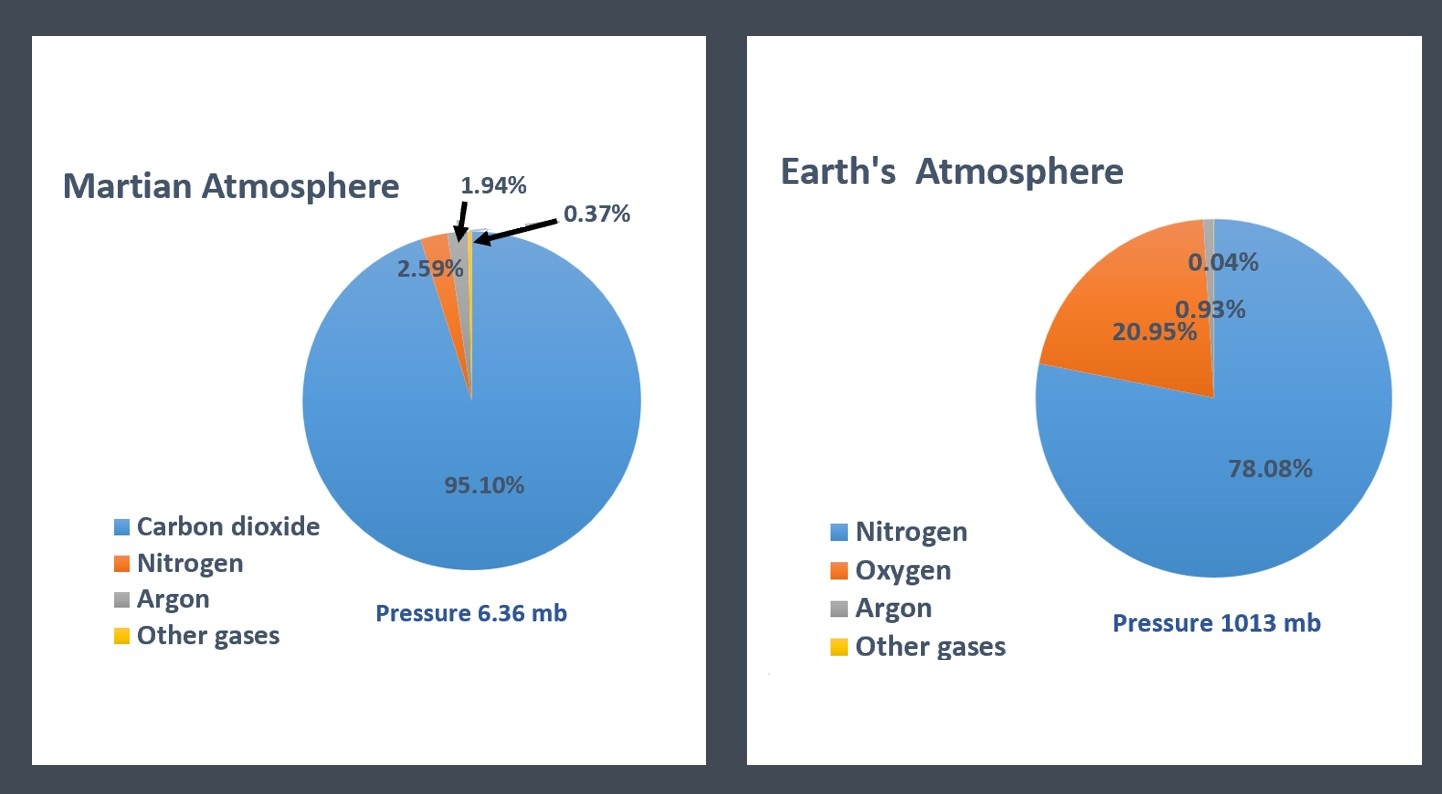
Source [1]. The figures for the Earth’s atmosphere are for dry air.
Why is a spacesuit needed on Mars?
The low atmospheric pressure means astronauts would have to wear a spacesuit to survive when venturing out onto the Martian surface.
The diagram below shows how the boiling and freezing point of water varies with atmospheric pressure. The freezing point barely changes with pressue but the boiling point falls at lower pressures. At standard sea-level atmospheric pressure (1013 millibars), water boils at 100oC. At a pressure of 63 millibars, water boils at the temperature of the human body (37oC) . This is known as the Armstrong limit.
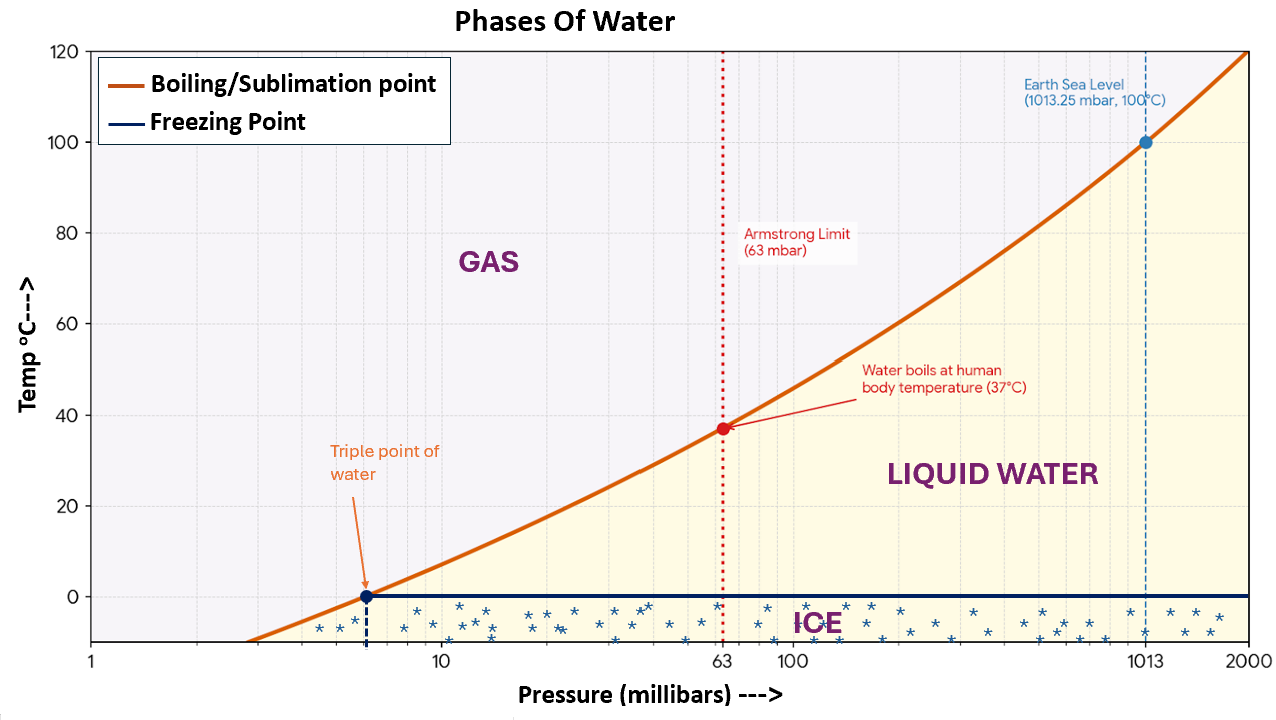
Note this diagram known as a phase diagram is normally shown in science textbooks with the Pressure and Temperature axes reversed.
At or below the Armstrong limit, water on any exposed surface of the body, e.g. the tongue, the lining of the nose, the surface of the eyeballs, the airways and the fluid lining the lungs, would boil away. Even if the atmsphere were pure oxygen, the lungs would be unable to absorb any of it into the bloodstream. The body would swell up as water vapourised under the skin and death would occur within minutes.
Inhabited Mars bases would have to be pressurised and airtight to prevent the escape of their atmospheric gases – like space stations and crewed spacecraft are today. Any significant rupture of the structure would lead to rapid decompression and the death of the inhabitants.
But if a leak were relatively small the crew would have significant time to make a repair. For example, if there were a hole one square centimetre in area in the wall of a small Mars base which had a pressurised volume of 200 cubic metres and an air pressure of 1000 millibars, then a situation physicists called choked flow would develop which limits how fast gas can escapethrough a relatively small hole. It would take over an hour for the pressure to fall to a dangerous level.
Can liquid water exist on the Martian surface?
The answer to this question is No
At a pressure below 6.12 millibars, known as the triple point, liquid water cannot exist. When ice is heated it sublimates directly to a gas. Interestingly, the mean atmospheric pressure of Mars ( 6.36 millibars) is just above this. At this pressure water freezes at 0.01oC and boils at 0.5oC. So liquid water could in theory exist over a tiny temperature range. However, because the Martian atmosphere is dry, any liquid water would rapidly evaporate. So, in reality, liquid water cannot exist on the Martian surface.
Harmful electromagnetic radiation reaches the Martian Surface
On Earth most wavelengths of electromagnetic radiation are blocked by the atmosphere and do not reach the surface. The most harmful radiation lies at the shorter wavelengths (gamma, X-ray and ultraviolet). This is known as ionising radiation and is almost totally blocked. The only exception being a fraction of the Sun’s ultraviolet which does get through and causes sunburn and in higher doses skin cancer.
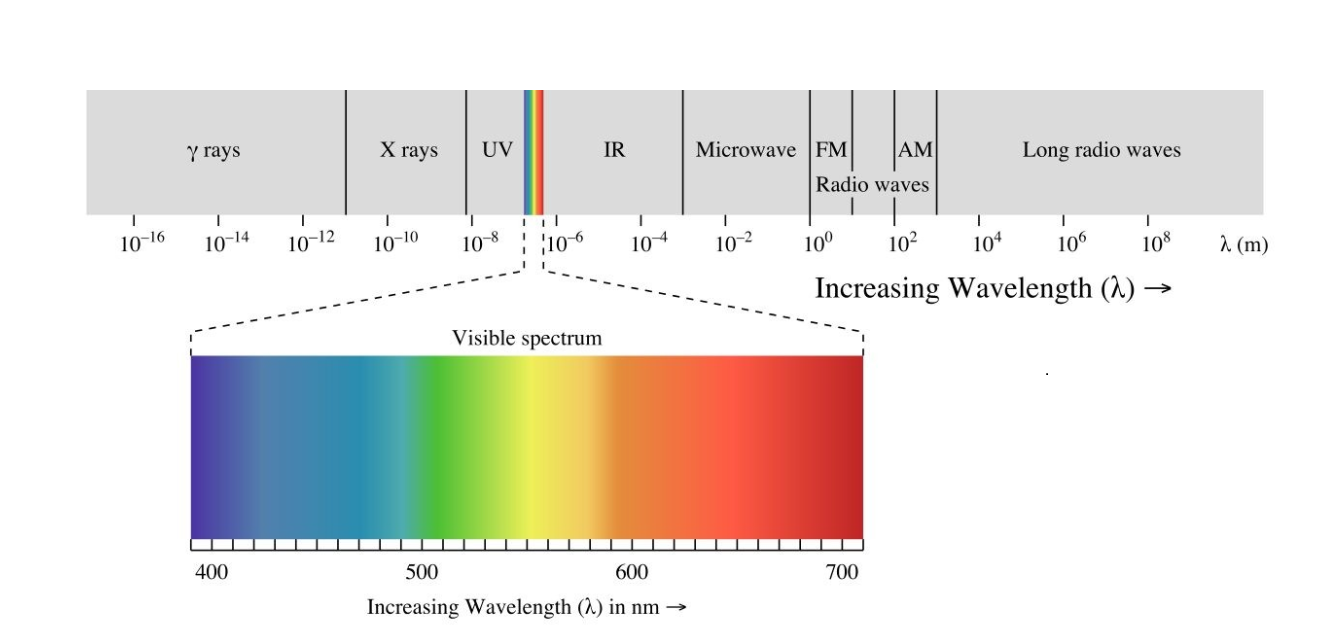
The electromagnetic spectrum
Does the Martian atmosphere block Ultraviolet radiation?
Mars’s atmosphere does not effectively block the Sun’s ultraviolet radiation, but a space suit does and would provide adequate protection.
Does the Martian atmosphere block X-rays?
In general, the Sun emits only a small fraction of its energy as X-rays and these are blocked by the Martian atmosphere [2]
However, when the Sun is at is most active, around the peak of the 11 year sunspot cycle, it frequently emits intense burst of charged particles from its surface. These are preceded by a burst of very energetic short wavelength X-rays known as hard X-rays some of which pass through the Martian atmosphere. A spacesuit would not provide protection against these hard X-rays and any astronauts outside their base would be hit by a significant dose of radiation. Measurements made by NASA’s Curiosity rover estimated that someone out on the Martian surface during a powerful solar flare in May 2024 would have received a radiation dose equivalent to 30 chest X-rays. [5] Howver the total dose would still have been 8 milligrays which is not considered to be harmful.
The danger is that after the initial flash of X-rays, from an X-class solar flare, an intense burst of electrically charged particles arrives 30 hours later. Exposure to these could be lethal.
Does the Martian atmosphere block Gamma Rays?
Most gamma rays reaching Mars are generated by cosmic sources rather than the Sun.
Gamma rays are not blocked by the Martian atmosphere and astronauts on Mars would be exposed to a steady dose of background gamma rays -which would be a limiting factor for how long they could spend outside on its surface.
What is the Temperature range on Mars?
Mars is on average 1.52 times further away from the Sun than the Earth. This mean the intensity of the Sun’s radiation is only 43% of that reaching Earth and Mars is significantly cooler. At the Martian equator at the equinoxes, the daytime surface temperature peaks at about 0oC in the early afternoon, but the thin Martian atmosphere does not retain heat overnight and before dawn the temperature drops to -80oC.
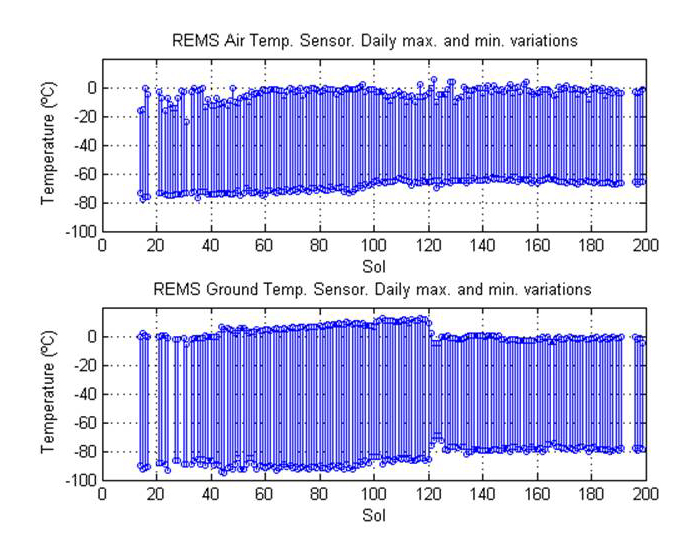
These two graphs show a record of temperatures measured by NASA’s Curiosity rover at its landing location 5.4oS of the Martian equator. Sol number (Martian day) is defined so that Curiosity’s landing day is Sol zero. The period corresponding to late winter through the end of spring in Mars’ southern hemisphere. Source NASA [3]
Interestingly, despite the low temperature, the thin Martian atmosphere means that for an astronaut working on its surface the challenge would be keeping cool. This is because the thin atmosphere would not remove much of the heat generated by an astronaut’s body and their spacesuit’s life support systems.
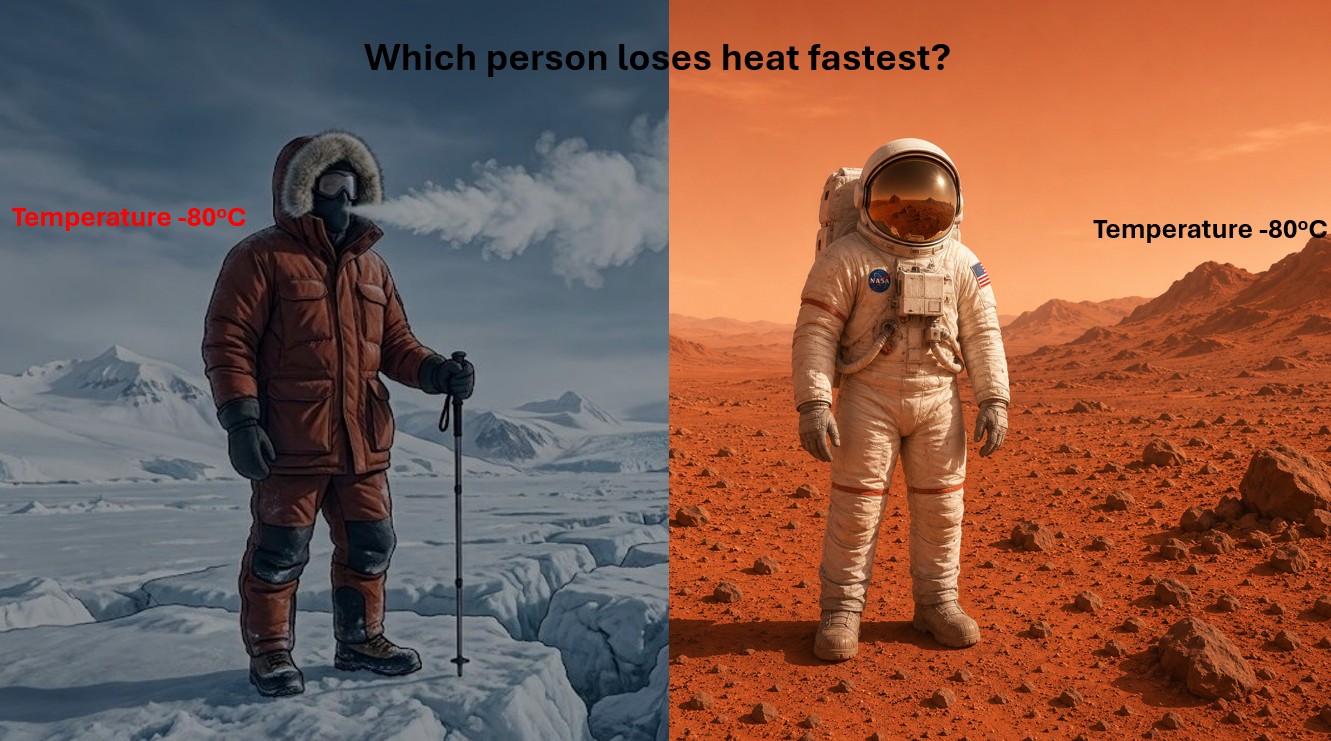
This is explained in a previous post where I discuss why it is easier to stay warm on Mars than Antarctica at very low temperatures.
Effects of Mars Having No Magnetic Field
The Earth is unique among the four inner planets in our Solar System (Mercury, Venus, Earth and Mars) in having a strong magnetic field. It protects us from harmful radiation from space. This invisible field, which causes the needle of a compass to point North, has enabled navigators to find their way across the sea for centuries and is even used by some birds and land animals in their migratory patterns.
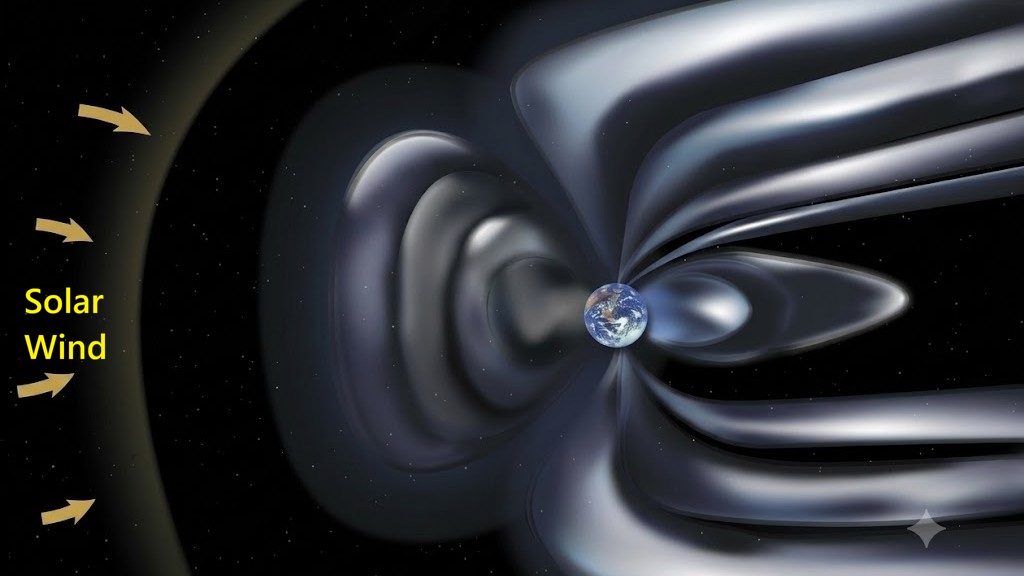
The Earth’s magnetic field is generated by movements stirred up in its outer core by its rotation . The outer core is made of iron which is a good conductor of electricity, and it is molten because of the high temperatures. For any planet to have a magnetic field:
- Part of its interior must consist of a liquid which conducts electricity.
- It must be rotating rapidly enough to generate convection currents.
Because Mars is smaller than Earth, its core cooled more rapidly and solidified about 4 billion years ago. At this point its magnetic field vanished. The lack of magnetic field caused a gradual stripping of its atmosphere by the solar wind over billions of years leaving it with the very tenuous atmosphere it has today.
The lack of magnetic field means that astronauts on its surface would constantly be exposed to a low level of charged particles from the Sun and from other sources in the galaxy known as cosmic rays. Although not lethal this constant steady exposure would increase the risk of cancer in later limit. When a large solar flare or CME was emitted from the Sun, there is a good chance any astronauts on the surface would get a lethal dose of radiation. They would have to take cover in a radiation shelter on the Mars base.
Toxic Perchlorates in the Martian Soil
Perchlorates are chemicals which contain the perchlorate ion. This consists of a single chorine atom surrounded by four oxygen atoms. They are powerful oxidising agents and are used in propellants for rockets, fireworks and flares. Ammonium perchlorate was a component of the solid rocket fuel used in the Space Shuttle and in the Space Launch System used by Artemis.
Perchlorates, mostly in the form of sodium and magnesium perchlorate, were discovered on Mars in 2009 by the Phoenix Lander [4] at a concentration of around 0.6%. This was a surprising finding . They are only found at low concentrations in the Earth’s soil. It is now known that perchlorates are widespread in Martians soil and formed by the interaction between metal chlorides, oxygen containing compounds and UV light from the Sun
A perchlorate soil concentration of 0.6% would stunt plant growth and any human eating crops grown in such a soil would receive a toxic dosage of perchlorate. To grow crops on Martian soil it would need to be pre-treated to remove perchlorates. This could be done by washing the soil – using water to extract the perchlorates.
Could perchlorates be used a source of oxygen on Mars?
Assuming that perchlorates are widespread in the Martian soil the answer is Yes. They break down when heated into chlorides and pure oxygen. For example, sodium perchlorate decomposes at 490°C into sodium chloride (common salt) .
The chemical reaction is:
NaClO4 à NaCl + 2 O2
122.5 grams of sodium perchlorate produces 64 grams of oxygen.
This works out as a volume of roughly 50 litres of pure oxygen – at a temperature of 25 degrees C and a pressure of 1 atmosphere (1013 millibars).
The Unknown long-term effects of low gravity on the Human body
Thelong-term impact of low gravity on the human body has never been studied. All studies have been carried out in zero, rather than low, gravity conditions, primarily on astronauts who have spent long periods of time on the International Space Station (ISS).
When astronauts spend a long time in zero gravity their bones and muscles weaken. Muscle strength can be preserved by a strict exercise regime, but nothing can be done to prevent the loss of bone mass. A strong skeleton is not needed to support a body which weighs nothing, and astronauts lose 1-2 % of their bone mass for each month of weightlessness. Calcium from their bones is excreted in their urine, and sometimes so much calcium is lost that they develop kidney stones. The experience of the ISS astronauts would suggest that this rate of bone loss does not level off over time. After more than two years in zero gravity, astronauts’ bones might be so weak that they would easily fracture and would be unable to support their weight when they returned to Earth. This is a limiting factor for how long humans can spend in a zero-gravity environment.
Because it is not possible to create a low gravity environment for a prolonged period of time on the Earth, there have been no studies on how the human body would adapt to low gravity (rather than zero gravity). So, the following questions remain unanswered.
- What is the rate of loss of bone mass in a low gravity environment?
- How would children born and growing up in a low gravity environment develop?
- Would children born on Mars, and who had spent their entire life there, have bones too weak to enable them to live on Earth later in life?
If it were shown that humans could not live healthily in a low gravity environment, then the effect of low gravity could be mitigated by strapping weights to the body for long periods of time . The aim being to make the body weigh the same as it does on Earth. For example, someone who weighed 70 kg on Earth would only weigh 27 kg on Mars, but by strapping 114 kg weights to their body (which would only weigh 43 kg on Mars) their effective weight would be 70 kg.
However, this would be somewhat cumbersome and I am not sure whether Martian colonists would want to live with heavy weights strapped to themselves!
References
[1] NASA (2025). Planetary Fact Sheets. [online] Available at: https://web.archive.org/web/20250818154100/https://nssdc.gsfc.nasa.gov/planetary/planetfact.html (Accessed 28 July 2026).
[2] Yu Doachan (2026). Forward Simulation of X-Ray Transmittance Profiles in the Martian Atmosphere. Atmosphere 2026, 17(5), Available at: https://www.mdpi.com/2073-4433/17/5/476 (Accessed 28 July 2026).
[3] Nasa.gov. (2013). Steady Temperatures at Mars’ Gale Crater – NASA Science. [online] Available at: https://science.nasa.gov/resource/steady-temperatures-at-mars-gale-crater/. (Accessed 28 July 2026).
[4] Hecht, M.H., Kounaves, S.P., Quinn, R.C., West, S.J., Young, S.M.M., Ming, D.W., Catling, D.C., Clark, B.C., Boynton, W.V., Hoffman, J., DeFlores, L.P., Gospodinova, K., Kapit, J. and Smith, P.H. (2009). Detection of Perchlorate and the Soluble Chemistry of Martian Soil at the Phoenix Lander Site. Science, 325(5936), pp.64–67. Available at https://doi.org/10.1126/science.1172466 . (Accessed 28 July 2026).
[5] NASA Watches Mars Light Up During Epic Solar Storm – NASA. (2024). Available at: https://www.nasa.gov/solar-system/planets/mars/nasa-watches-mars-light-up-during-epic-solar-storm/ [Accessed 20 Aug. 2026].
Discover more from Explaining Science
Subscribe to get the latest posts sent to your email.


That’s a great read, Steve. Thanks!
It’s natural for many of us to dream of visiting Mars ourselves but the scientific reality which you describe shows how difficult and mostly pointless it would be to try to colonise the planet.
There are two principle reasons for going to Mars. One is to further our scientific knowledge and this is already being done very capably by sophisticated robotic missions.
The other reason seems to replace scientific endeavour with what seems to be an out of control mix of personal vanity & greed, combined with an apparent desire to lawlessly exploit resources and/or turn a dead planet into a potential tourist resort.
Along with the water on Mars, my own dreams evaporated long ago . . . .
LikeLike
Thank you and yes some interesting observations. If we every to build communities on Mars, I how happy the colonists would be living in their air-tight bases, only being able to venture onto the surface for short periods and being dependent on supplies for Earth
LikeLiked by 1 person
a friend of mine, no longer alive sadly, wrote a series of fictional tales about a retirement colony on Mars. Joan was very clever but hadnt thought of all that! But she would say, “its Fiction, Margaret, artistic licence!” Of course, the strongest reason to me for not wanting to go anywhere near the red planet is that Elon Musk might already be there….. or is that wishful thinking…
LikeLike
Interesting. Over the years so many science fiction stories have been set on Mars, probably more than all other planets put together.
I think it will be a while before Mr Musk gets there !! 🙂
LikeLike
phew! The “martians” may be spared!
LikeLike
I had to take all these facts into account when I wrote my Generation Mars trilogy. It certainly posed some interesting creative solutions!
LikeLike
Interesting and yes there are a few challenges in settling on the red planet!!
LikeLiked by 1 person
It’s a pipe dream. We are destroying ourselves faster on earth, through climate change and insane politics, that will ever allow, remotely, for a base to be built anywhere even if only for mining and resource purposes.
LikeLiked by 1 person
I think many people share your viewpoint, but i am an optimist and take the that eventually we will explore and colonise other planets but it won’t be for a long time in the future. I can’t see this happening for many hundreds of years
LikeLiked by 1 person
Hi Steve,
Thanks, brilliant post as usual.
One additional problem that occurs to me (as if the colonists wouldn’t have more than enough problems, plus occasional surprises!) is the assumption – usually by fiction writers – that the permanent living quarters might be something resembling a large plastic dome.
In one of your much older posts you were discussing the effects of loss of air pressure on the human body. You gave an example of a 1cm² hole in a 200m³ dome, with the comment that assuming an initial pressure of 1 bar internally, the residents might have an hour or so to fix it.
Considering the rate of meteorite bombardment on the Martian surface, through a very thin atmosphere …
https://zenodo.org/records/6604912/files/Daubar_2022_catalog_tableS1.xlsx?download=1
sooner or later the dome would suffer far worse than accidents than that, and – like their lunar counterparts – they’d do well to situate their accommodation underground.
Regards, David.
LikeLiked by 2 people
Thanks David,
and yes it would be safer to site a future Mars base underground
LikeLiked by 1 person
I recently read A City on Mars, by Kelly and Zach Weinersmith, that made a lot of the same points about the physical challenges of settling Mars. (As well as a lot of the social and legal challenges that you wouldn’t necessarily think of). A great read, if you haven’t already read it.
LikeLiked by 1 person
Thanks and I haqven’t yet read “A City on Mars” but it is on my list of books to read.
LikeLiked by 2 people