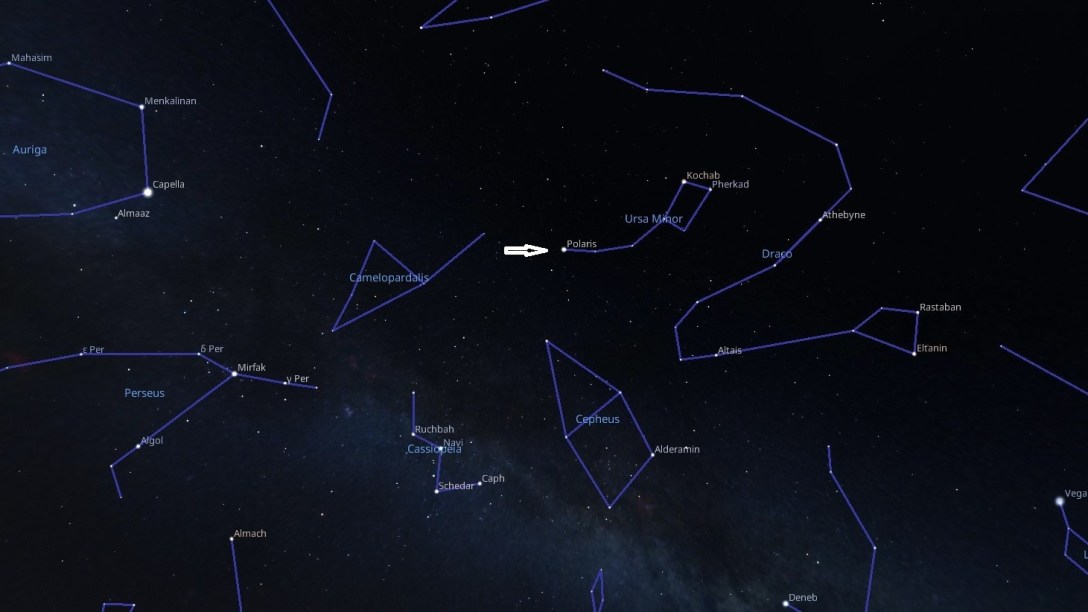
Polaris, commonly known as the pole star, is situated near the North Celestial Pole and has been used for centuries for navigation. But Polaris hasn't always been the Pole Star and won't be in future. This is gradually changing over a 25 800 year cycle.
Tag: Astronomy
Astronomy Items
Life on Venus?
Many of you will have seen the story widely reported in the media of the discovery of the gas phosphine in the clouds of Venus - if not, you can find the story here: https://www.bbc.co.uk/news/science-environment-54133538. On Earth phosphine is produced by bacteria and it has led to the interesting speculation as to whether there could be… Continue reading Life on Venus?
Surveying the Cosmos – Part II
In a previous post I talked about the Large Synoptic Survey Telescope (LSST), a large telescope being built in Chile which will spend 90% of its time surveying most of the sky a total of 1000 times over a 10 year period (in the remaining 10% it will revisit areas of specific interest). In this… Continue reading Surveying the Cosmos – Part II
11-12 August 2020 – the Perseids
For revised post containing more tips on how to view the Perseids see The Perseids 2021. Meteors (also known as shooting stars) are bright streaks of light caused by small lumps of rock or metal called meteoroids hitting the Earth's atmosphere at a very high speed (in the case of the Perseids around 200,000 km/h). As… Continue reading 11-12 August 2020 – the Perseids
Surveying the Cosmos – Part I
In this post I'm going to talk about a new 500 million dollar telescope, the Large Synoptic Survey Telescope (LSST), being built at Cerro Pachón in Chile, and the survey of the cosmos it will be undertaking over a 10 year period. Cerro Pachón is located in the foothills of the Andes at a latitude… Continue reading Surveying the Cosmos – Part I