These are some of my cosmology posts
-
The darker mornings.
Updated 14 December 2025 As I complete this post from my home in Manchester, England, it is 4:30 pm and already dark outside. Many people think that it will continue to get dark earlier each day in the afternoon until we reach the winter solstice , which in 2025 occurs on 21 December in the…
-
A Christmas gift from Explaining Science 2017
Christmas is almost upon us. Once again I’m offering my e-books for free during the first five days of December! Just call me Father Christmas :-). “Is Anyone Out There?” is about the likelihood of there being extraterrestrial intelligent life. It is based on a number of posts from my blog. For readers based in the UK the…
-
The Impact of Copernicus on Astronomy
Updated January 19 2026 The move away from the prevailing Earth-centred theory of the Universe to the heliocentric theory published in 1543 by Nicolas Copernicus, represents one of the greatest advances in astronomy ever made. Nicolas Copernicus – Image from Wikimedia Commons Problems with the Geocentric Theory The Geocentric theory of the Universe was the…
-
Geocentric Cosmology
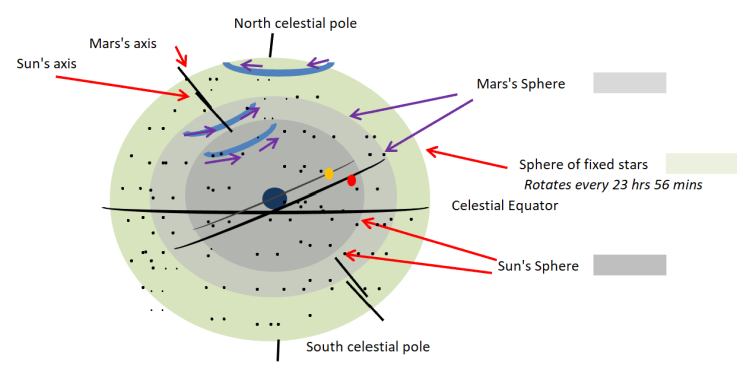
Revised July 2026 Today it is generally accepted fact that the Earth is one of eight planets which revolve around the Sun, that the Sun is one of 400 billion or so stars in our Milky Way galaxy and that the Milky Way is one of hundreds of billions of galaxies in the observable Universe.…
-
The early days of the space race
In my previous post I talked about two significant successes for the Soviet Union in 1957: the first artificial satellite in orbit in October and the first living creature, a dog named Laika, in orbit in November. In December of that year the Americans had a humiliating failure when the Vanguard spacecraft exploded in a…
-
4 October 1957 – the start of the space age
Updated 16 December 2025 On 4 October 1957, the Soviet Union launched the first artificial satellite, Sputnik 1, into orbit around the Earth. This is considered to be the beginning of the space age. Before this date there were no human made satellites in space but on every single day since then there have been artificial…
-
The discovery of pulsars 1967
Updated 14 December 2025 In 1967, a 24-year-old student from Cambridge University, Jocelyn Bell, was doing the research for her PhD. She was using a radio telescope to study radio waves emitted from compact astronomical objects known as quasars, and when she analysed the data she had collected, she noticed a signal which appeared to…
-
Solar eclipse 21 August 2017 – America on the move
The 2017 total solar eclipse attracted massive attention, with approximately 200 million Americans within driving distance of its path. An estimated 7 million travelers joined 12 million others witnessing the eclipse. This event marked one of the largest human migrations for a natural phenomenon, enhanced by unprecedented social media coverage.… Continue reading Solar eclipse 21…
-
Is 196 a Lychrel Number?
Discusses the intriguing mathematical question of whether 196 is a Lychrel number, defined as a number that never results in a palindrome through repeated “reverse and add” processes. Despite extensive computational attempts, no palindrome has been found for 196, making it a leading candidate for a Lychrel number. … Continue reading Is 196 a Lychrel Number?…
-
12-13 August 2017 – the Perseids
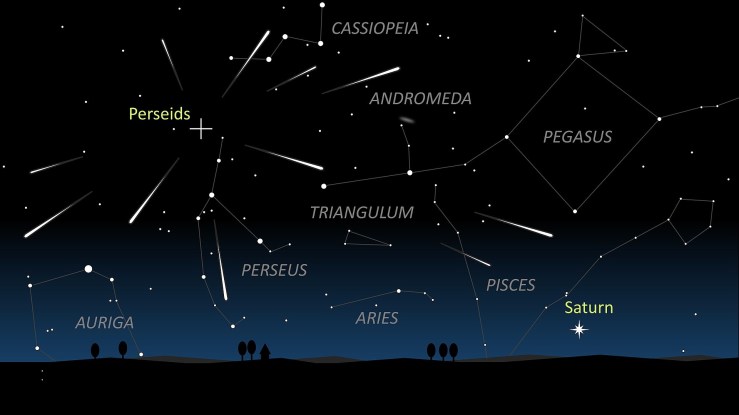
In this post originally published in 2017 I talk about the Perseids meteor shower. Occurring annually from late July to mid-August, it offers an alternative for those who were unable to see the August 2017 eclipse. Best observed just before dawn in dark areas, the meteor shower is caused by the Earth passing through debris…

