These are some of my latest posts
-
Daylight Saving Time
As mentioned in my previous post, in the early hours of Sunday 27 October the clocks go back an hour throughout the European Union and daylight saving time comes to an end. Although many Europeans will welcome the extra hour in bed on the night of 26/27 October, I suspect that a lot of people…
-
Jim Peebles winner of the Noble Prize 2019
I was interested to hear that Jim Peebles, at the age of 84, has won a half share of the 2019 Noble Prize for physics for theoretical discoveries in physical cosmology. Jim Peebles (1935-) Image from Wikimedia commons In the early 1960s Peebles and his colleague Robert Dicke had predicted the existence of the microwave…
-
The Science Behind Time Zones Explained
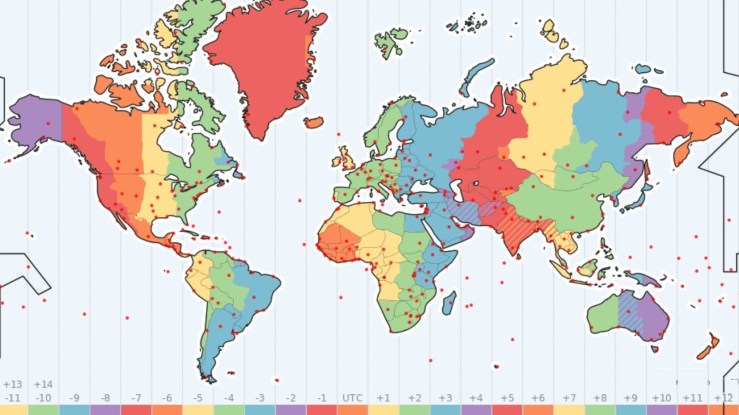
Discusses the measurement of time and the use of time zones globally. It explains solar time, apparent solar time, and mean solar time, highlighting how time varies due to Earth’s orbit and tilt. The establishment of standard time zones, particularly through GMT, addresses coordination for transportation and communication..… Continue reading The Science Behind Time Zones Explained…
-
The September equinox
In 2019 September 23 is the date of the September equinox and is also the first day of autumn (or the first day of spring if you’re one of my readers in the Southern Hemisphere). In this post I’ll talk about the equinoxes and discus the commonly held view that they are the two days in…
-
The Goldbach Conjecture
The Goldbach conjecture, posed in 1742, asserts that every even number greater than 2 can be expressed as the sum of two prime numbers. Despite exhaustive verification for even numbers up to four quadrillion, no proof exists for all even integers. A million-dollar prize for a solution remains unclaimed.… Continue reading The Goldbach Conjecture →
-
Relaunching My Science Blog: Welcome to Explaining Science
In 2019, the Science Geek blog was relaunched as Explaining Science, featuring a new name, logo, and domain. The blog continues to target a similar audience with accessible articles on astronomy and space. Additionally, a YouTube channel was launched in 2020, offering diverse video content under a Creative Commons license.… Continue reading Relaunching My Science…
-
12-13 August 2019 – the Perseids
For revised post containing more tips on how to view the Perseids see The Perseids 2021. Meteors (also known as shooting stars) are bright streaks of light caused by small lumps of rock or metal called meteoroids hitting the Earth’s atmosphere at a very high speed (in the case of the Perseids around 200,000 km/h). As…
-
Apollo 11 lunar landing
20 July 2019 is the fiftieth anniversary of the first manned landing on the Moon. Mission Insignia of Apollo 11- Image from NASA On 21 May 1961 President John F Kennedy made the following address to the United States Congress: ‘I believe that this nation should commit itself to achieving the goal, before this decade…
-
Summer twilight
This explains the stages of twilight , and describes how the Sun’s path changes throughout the year in Manchester, England. The phenomenon of “Simmer Dim” in the Shetland Islands is highlighted, characterized by continuous twilight and celebrated with a festival.… Continue reading Summer twilight →
-
e-book from Explaining Science on Venus
Updated 7 December 2025 I have now updated my e-book on Venus, the planet closest to the Earth in distance, size and internal composition, and the third brightest natural object in our sky after the Sun and the Moon. Topics include how Venus appears from Earth and the fact that Venus’s phases can only be…

